Skip to content

Sugar Substitute Analysis

Quantitative determination of sugar alcohols (polyols) and intense sweeteners using HPLC-UV and HPLC-DAD – supporting energy calculation, claim verification and maximum level compliance under ISO/IEC 17025 accreditation.

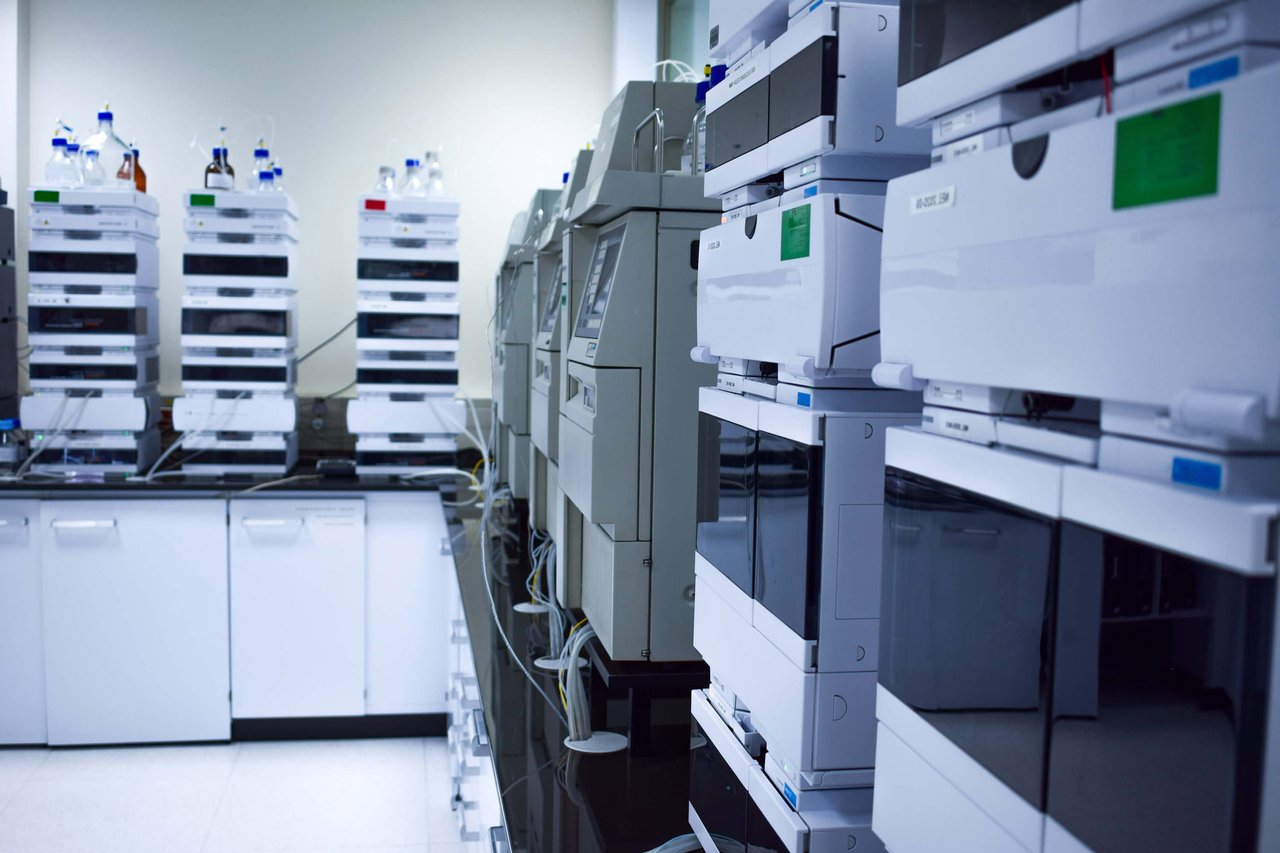
A laboratory filled with various types of scientific equipment, including beakers, microscopes, and test tubes.

Two Substance Groups –
Polyols and Intense Sweeteners

A close-up of a pile of white chewing gum, scattered on a flat surface.

Sugar substitutes in food production fall into two distinct analytical groups: polyols and intense sweeteners. Their authorized use and maximum levels are defined under Regulation (EC) 1333/2008, including substance-specific limits and mandatory labelling. Analytical testing verifies compliance by quantifying target compounds and confirming correct use levels across diverse matrices.

Our accredited laboratories provide targeted analysis of polyols and intense sweeteners using method selection aligned with substance class, concentration range and matrix complexity.

Parameter Portfolio

Complete coverage of authorized sugar alcohol and intense sweeteners.

Polyols (Sugar Alcohol)

Sweeteners with reduced caloric value. Relevant for nutrition declarations, energy calculation and „sugar-free“ / „no added sugars“ claims.

Methods: HPLC-RI.

Common analytes: Sorbitol, mannitol, xylitol, erythritol, maltitol, isomalt.
Intense Sweeteners

High-potency sweeteners are used in low concentrations. They are subject to maximum levels per food category, as specified in Regulation (EC) 1333/2008.

Methods: HPLC-UV, HPLC-DAD.

Common analytes: Acesulfame K, aspartame, cyclamate, saccharin, sucralose, steviol glycosides, neohesperidin DC, neotame, aspartame-acesulfame salt, advantame and thaumatin.

Analytical Methods

Method selection is determined by substance group, matrix and required sensitivity.
Multi-analyte screening is available where substance classes overlap.
Polyols

HPAEC-PAD

High-performance anion-exchange chromatography with pulsed amperometry detection. This technique enables the selective separation of sugar alcohols in an alkaline medium without derivatization. The electrochemical detector responds to hydroxyl-bearing compounds, providing high selectivity even in complex food matrices. Typical quantification range: 0.1–20 g/100 g, depending on the matrix.

Polyols – Alternative

HPLC-RI

HPLC with refractive index detection.
It is widely used for polyol determination in simpler matrices (e.g. confectionery and beverages). It is less selective than HPAEC-PAD in complex matrices containing multiple carbohydrate species but is well-suited to routine screening and quality control applications.

Intense Sweeteners

HPLC-UV/DAD

Multi-component determination of acesulfame K, aspartame, saccharin, sucralose, and cyclamate in a single chromatographic run. Diode array detection provides spectral confirmation. This is the standard method for most food categories where sweetener concentrations are at or above mg/kg levels.

Trace-Level / Confirmation

LC-MS/MS

Tandem mass spectrometry for unambiguous identification and trace-level quantification. Required for steviol glycosides (including differentiation of rebaudioside A, D and M), advantame and neotame — substances for which UV detection lacks sufficient selectivity or sensitivity. It is also used for screening undeclared sweeteners in 'clean label' products.

Related Analytics

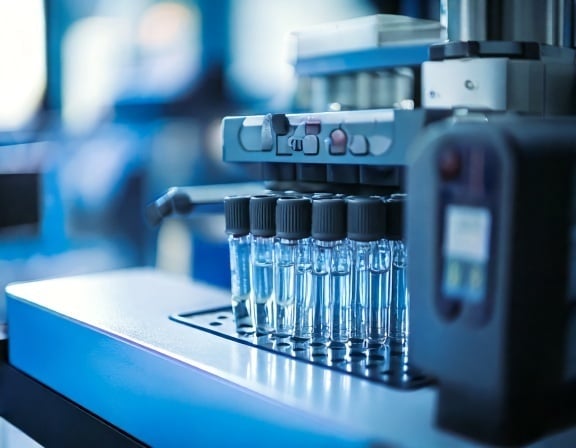
Detailed view of an HPLC autosampler featuring several test tubes positioned for analysis.

Preservatives & Antioxidants

Multi-component HPLC methods can combine sweetener and preservative determination in a single analytical run – reducing sample volume and turnaround time.

Learn More
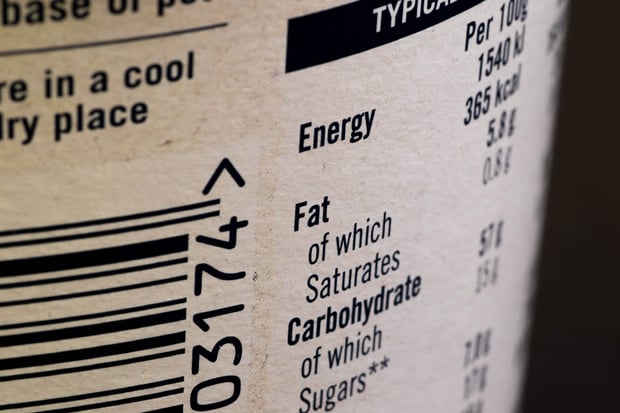
Fat content information displayed on food packaging label with shallow depth of field.

Labelling & Claims Verification

Analytical verification of nutrition and health claims involving sweeteners – „sugar-free“, „no added sugars“, „reduced energy“ – against Regulation (EC) 1924/2006 criteria.

Learn More