Skip to content

Chemical Contaminant Analysis

Integrated analysis of process- and environmental contaminants across the value chain. Covers acrylamide, furan, PAH, PFAS and other regulated parameters within one analytical program.

Water is poured into a glass, creating soap bubbles.

From Process to Environment –
One Integrated Analytical Approach

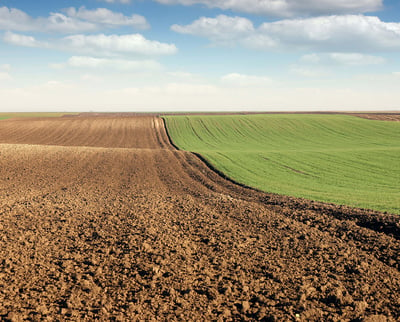
A plowed field with young green wheat stretches across the landscape on a sunny autumn day.

Chemical contaminants can enter food unintentionally during production, via raw materials, or through environmental exposure. Process contaminants form through reactions such as heating, roasting, refining, frying, smoking, or chemical treatment (e.g., acrylamide, 3‑MCPD, furan, PAH). Environmental contaminants enter via soil, water, air, or industrial emissions (e.g., heavy metals, dioxins/PCBs, PFAS).

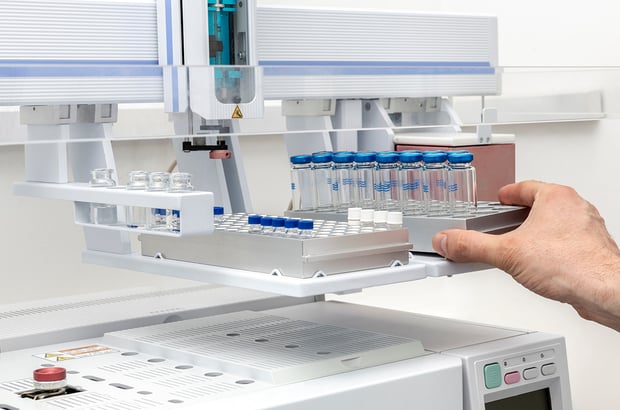
We analyse all EU‑regulated contaminants using LC‑MS/MS, GC‑MS/MS, GC‑HRMS, ICP‑MS, and headspace GC/MSD, ensuring sensitive and regulation‑compliant determination across food and feed matrices.
Process vs. Environmental Contaminants

Chemical contaminants are differentiated based on their primary origin, as this directly determines regulatory assessment, analytical strategy and risk interpretation.

Process Contaminants

Formed during food processing or preparation.

Examples: Acrylamide, 3‑MCPD, glycidyl esters, PAHs, furan.

Regulatory focus: Minimization concepts, benchmark levels, matrix‑specific maximum levels.

Environmental Contaminants

Introduced via environmental exposure, agricultural background or contaminated raw materials.

Examples: Heavy metals, PFAS, nitrates.

Regulatory focus: Maximum levels, long‑term exposure, carry‑over control.

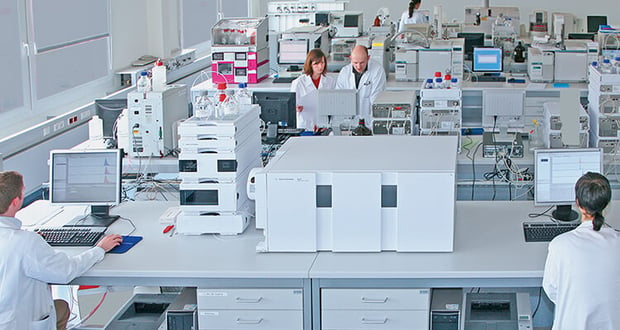
A diverse group of people collaborating in a laboratory setting, engaged in scientific research and experimentation.

PFAS Analysis – Specialist Expertise

Per‑ and polyfluoroalkyl substances (PFAS) require ultra‑trace detection, strict contamination control and compound‑group‑specific evaluation concepts.

Through Institut Kuhlmann, ifplabs integrates specialized PFAS expertise for food and feed testing, covering targeted PFAS determination and regulatory‑relevant sum‑parameter approaches.

Parameter Portfolio

Quantitative and qualitative determination of chemical contaminants using complementary analytical approaches.

Process Contaminants

Unintentionally formed during thermal/chemical treatment or contact with processing materials.

Methods: LC‑MS/MS, GC‑MS/MS.

Common analytes: Acrylamide, 3‑MCPD, glycidyl esters, PAHs, furan

Environmental Contaminants

Entered via soil, water, air or raw‑material contamination.

Methods: ICP‑MS (elements), LC‑MS/MS (PFAS, polar contaminants).

Common analytes: Lead, cadmium,  mercury, PFAS, nitrates.

Analytical Methods

A range of complementary analytical methods is applied, selected according to the specific contaminant and matrix. Modern laboratory infrastructure ensures reliable, cross-validated results for compliance and risk assessment.
Elemental Contaminants

ICP‑MS

Elemental contaminants such as heavy metals are determined at ultra-trace levels using inductively coupled plasma mass spectrometry. Enables multi-element analysis with high sensitivity and robustness across food and feed matrices. 

Persistent Organic Contaminants

GC‑HRMS / GC‑MS/MS

3-MCPD esters and glycidyl esters — formed during the refining of vegetable oils and fats. 

Polar & Thermolabile Contaminants

LC‑MS/MS

Acrylamide — formed primarily during high-temperature processing of starchy foods such as potato products, bread and baked goods.

Origin‑ & Source‑Specific Methods

Headspace GC-MS

Furan and methylfurans — formed during thermal processing of foods such as coffee, baby food or canned products .

Analytical Interpretation

Assessment based on maximum levels, guidance values and orientation values, depending on the contaminant and regulatory framework.
Crispy crackers with sesame on wooden plate.

Process Contaminants

Undesirable substances that form during the processing or preparation of food. They typically arise at high temperatures during heating, roasting, baking or frying, through chemical reactions between naturally occurring food components. Some of these compounds can pose health risks even at low concentrations. For consumer protection, regulatory maximum levels are established for certain substances, and exceedances may indicate potential health concerns. 

Typical matrices:  Cereals/cereal-based products, baked goods, coffee, cocoa-containing products, potato products (e.g., chips, French fries), roasted or strongly heated foods (e.g., nuts, breakfast cereals).
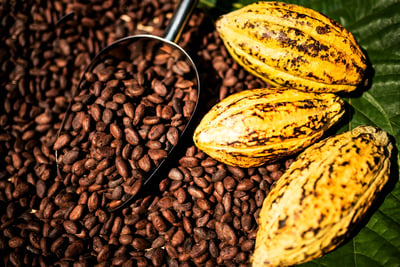
Cocoa beans and a cocoa fruit arranged as raw materials in a cocoa-themed composition, with aromatic cocoa beans forming the background.

Environmental Contaminants

Undesirable chemical substances that enter food from the environment. They do not form during processing but originate from sources such as air, water, soil or industrial emissions. Through these pathways, contaminants can be taken up by plants or accumulate in animals and enter the food chain. Some substances are highly persistent, degrade slowly and may accumulate in the human body. Due to their potential health impact, regulatory maximum levels are established for a range of substances. 

Typical matrices: Fish, seafood, meat, milk, eggs, cereals/cereal products, fruits, vegetables, vegetable oils, high-fat foods.

Water drops fall onto a transparent water surface, with the shadow of a palm leaf creating a flat-lay top view composition.

PFAS – Risk‑Oriented Interpretation

PFAS assessment requires compound‑group‑specific evaluation rather than isolated single‑substance interpretation. Regulatory relevance depends on sum parameters, detection limits and evolving legal thresholds.

Typical matrices: Retail monitoring, authority dialogue, risk‑based decision making (PFAS).

Illustration Law

Regulatory Framework

Chemical contaminants are regulated via matrix‑specific maximum levels under Regulation (EU) 2023/915 and associated implementing acts. Analysis and interpretation must consider processing effects, contamination origin and legal definitions.

Related Analytics

A set of glass petri dishes with liquid inside, positioned on a lab table for experimental purposes.

MOSH/MOAH

Dedicated mineral oil hydrocarbon analysis – quantification, confirmation, and source identification. Online-HPLC-GCFID + GCxGC-ToF-MS + LC-GCxGC-ToF-MS/FID.

Learn More
A laboratory scene showcasing a glass block resting on a table, with various lab instruments in the background.

Elements & Ions

Full ICP-MS panel – heavy metals as contaminants and nutritional minerals in one analytical programme. Arsenic speciation available.

Learn More