

Skip to content

Nutritional Analysis

Accredited nutritional analysis including Big Seven, extended nutrients and detailed carbohydrate and fatty acid profiling.

A lab-coated individual is engaged in research activities within a well-equipped laboratory environment.

From Big Seven to Extended Nutrient Profiling –
Comprehensive Nutritional Analytics

Omega-3 fatty acid rich foods.

Accurate nutritional data are essential for compliant labelling and product development. ifplabs determines mandatory and extended nutrient parameters – from the Big Seven to detailed profiles of sugars, polyols, starch, dietary fibre fractions, fatty acids, amino acids and minerals. Using ISO/IEC 17025‑accredited wet‑chemical and instrumental methods, we analyse all major food and feed matrices and calculate energy values according to EU, UK and Codex standards.

Parameter Portfolio

Complete analytical coverage of nutritional parameters across wet‑chemical and instrumental methods. LOQs are matrix‑dependent.

Big Seven & Proximate Analysis

Core parameters required for EU/UK nutrition labelling, and proximate composition for complete mass balance and product specification. Classical wetchemical methods ensure robust quantification across diverse food categories.

Methods: Kjeldahl (VDLUFA/AOAC), Weibull‑Stoldt/ Soxhlet/acid hydrolysis, GC‑FID, HPLC‑RI, oven drying, Karl Fischer, muffle furnace.

Common analytes: Protein (N × factor), total fat, saturated fat, carbohydrates (by calculation), total sugars, salt, energy (kJ/kcal), moisture, ash.


Carbohydrate Differentiation

Comprehensive analysis of individual sugars, polyols, starch and dietary fibre fractions to support energy calculation, claim substantiation and product formulation. High‑resolution chromatographic methods enable accurate quantification even in complex matrices.

Methods: HPLC‑RI, HPAEC‑PAD, enzymatic–gravimetric fibre methods (AOAC 991.43), enzymatic starch determination, AOAC 999.03, AOAC 2002.02.

Common analytes: Glucose, fructose, sucrose, lactose, maltose, galactose, sorbitol, mannitol, xylitol, erythritol, maltitol, isomalt, total starch, soluble/ insoluble dietary fibre, resistant starch.

Fatty Acid Profiling

Complete fatty acid composition from C4 to C24, including saturated, mono‑ and polyunsaturated fatty acids, trans fatty acids and omega‑3/omega‑6 series. GC‑FID profiling delivers high specificity for labelling, nutritional assessment and lipid characterisation.

Methods: GC‑FID (FAME), GC‑MS.

Common analytes: Saturated fatty acids (SFA), monounsaturated fatty acids (MUFA), polyunsaturated fatty acids (PUFA), trans fatty acids (TFA), omega‑3 (ALA, EPA, DHA), omega‑6 (LA, ARA), cholesterol.

Amino Acids & Protein Quality

Quantification of total and free amino acids for nutritional scoring, product specification and claim verification. Dedicated hydrolysis and detection protocols ensure recovery of sensitive and sulphur‑containing amino acids.

Methods: Amino acid analyser following acidic and alkaline hydrolysis. 

Common analytes: Total amino acids, free amino acids, tryptophan, methionine, cysteine, hydroxyproline, taurine.

Analytical Methods

Method selection is determined by analyte, matrix and required sensitivity.
Reference Methods

Wet‑Chemical & Gravimetric Analysis

Classical reference procedures for core nutritional parameters. Kjeldahl digestion provides reliable protein quantification, while fat is extracted via Weibull‑Stoldt (acid hydrolysis with solvent extraction) or Röse-Gottlieb.

Instrumental Analytics

HPLC, GC‑FID & ICP‑OES

Chromatographic and spectrometric techniques for sugars, polyols, fatty acids and minerals. HPLC‑RI separates monoand disaccharides in a single run; polyols are quantified by HPAEC‑PAD. GC‑FID is applied for fatty acid profiling after derivatisation, resolving cis/trans isomers and extended C4–C24 distributions. Sodium, minerals and anions are determined using ICP‑MS.

Analytical Interpretation

Key analytical considerations that influence how nutritional results are evaluated and interpreted across different matrices.
Paper boxes with pre-packaged vegetable salads ready for sale.

Food & Beverages

Processed foods and beverages often contain complex ingredient systems that influence extraction efficiency and nutrient stability. Matrix effects from heating, emulsions or high moisture must be considered when interpreting results.

Typical applications: Pre‑packed foods, Ready meals, Dairy, Bakery, Confectionery, Beverages, Infant formula.

Sport food supplements. Sport Pills, vitamins and protein powder on the white table.

Dietary Supplements

Supplements contain concentrated actives and excipients that affect extraction and detection. Analytical results must distinguish fortified from native levels and manage high analyte concentrations.

Typical applications: Protein powders, Bars, Capsules, Liquids, Meal replacements, Sports nutrition.

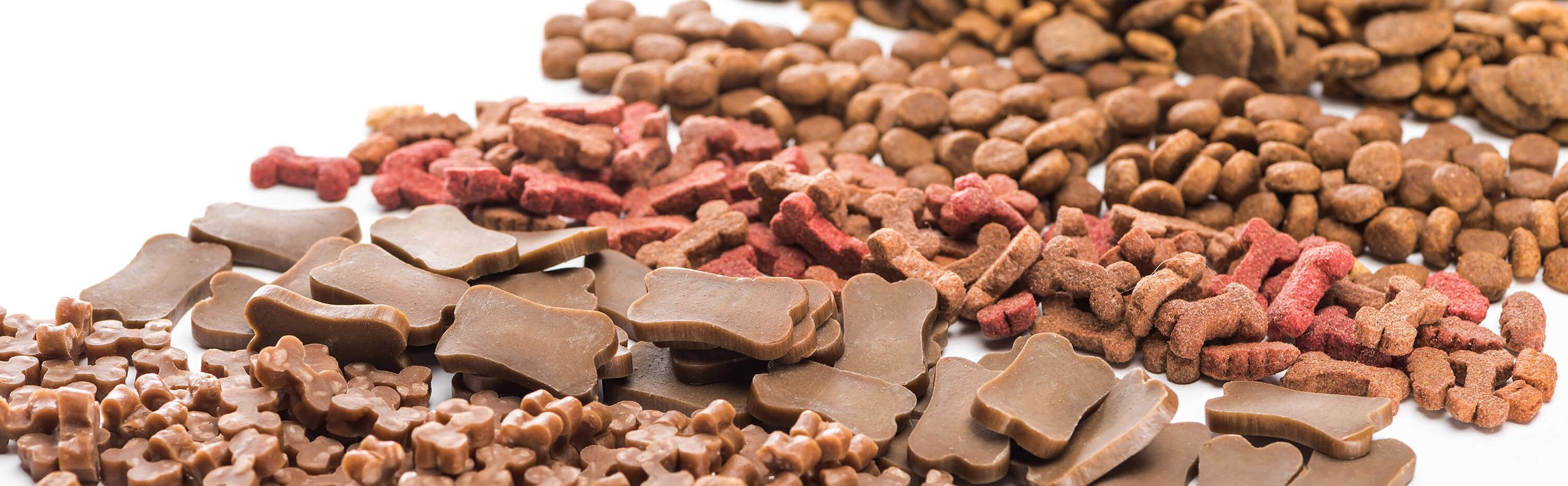
An assortment of dog treats and dry food displayed on a clean white surface.

Feed & Pet Food

Feed matrices are heterogeneous and include minerals, fats and premixes that impact recoveries and digestion steps. Interpretation aligns with species‑specific standards and premix inclusion rates.

Typical applications: Compound feed, Premixes, Pet food (dry, wet, raw), Mineral feed, AAFCO profiles.

Detailed view of a pile of green soybeans.

Raw Materials & Ingredients

Single‑ingredient materials show natural variability depending on origin and processing. Analytical focus lies on purity, identity and specification compliance.

Typical applications: Bulk commodities, Functional ingredients, Novel foods, Protein isolates, Starches, Oils.

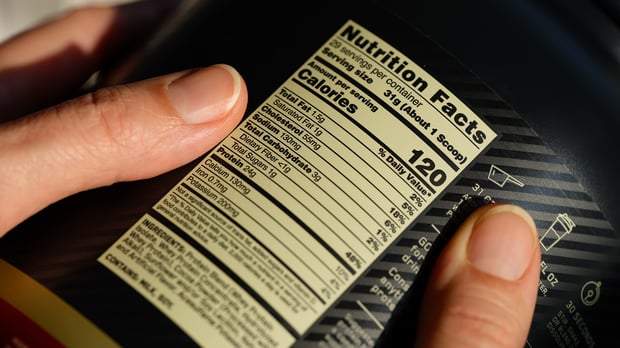
Close-up of black jar of whey protein powder with nutrition facts label in scientists Hands.

Energy Calculation

Energy values on EU/UK food labels are calculated – not measured – and rely on accurate nutrient analytics and the regulatory conversion factors.

Precise energy calculation depends on the analytical separation of carbohydrates, polyols, dietary fibre, fat and protein, as each contributes differently to total energy. Using the appropriate factor set – EU Annex XIV, UK retained law or Codex – is essential for compliant declarations, especially in reduced‑sugar or high‑fibre products.

Regulatory Framework

EU nutritional labelling is governed by a complex web of regulations – and the rules are evolving.

Whether you‘re launching a new product, reformulating an existing one, or expanding into new markets, we help you navigate the regulatory landscape and ensure your labels hold up to official scrutiny.

We provide analytical verification of declared nutrient values, assess compliance with tolerance thresholds, and advise on upcoming regulatory changes – so you stay ahead, not behind.

Regulation (EU) No 1169/2011 (FIC)
Mandatory nutrition declaration (Big Seven), energy calculation, tolerance rules for declared values.

EC Guidance Document (2012) & Q&A Notices
Tolerances for declared values, rounding rules, measurement uncertainty. Updated through ongoing Commission Q&A notices.

Regulation (EC) No 1924/2006
Nutrition and health claims – authorised claims only, tied to validated compositional thresholds.

Regulation (EU) No 609/2013
Food for specific groups: infant formula, follow-on formula, special medical purposes, total diet replacement.

Regulation (EC) No 767/2009 (Feed)
Nutritional declarations for compound feedstuffs and feed materials, including guaranteed analysis.

UK Retained EU Law & FIC (UK)
Post-Brexit parallel framework for Great Britain – with emerging divergences, notably on front-of-pack labelling and HFSS restrictions.

Related Analytics

Vitamins and minerals in fruits and vegetables on background.

Vitamin Analysis

All vitamins via HPLC, LC‑MS/MS or VitaFast® – for fortified foods, supplements and feed.

Learn More
Several bowls containing a variety of foods such as meat, eggs, fish, vegetables, and nuts.

Minerals & Trace Elements

Macro‑minerals and trace elements by ICP‑MS – for nutritional declarations and product specifications.

Learn More