
Skip to content

Food Additive Analysis

Identification and quantification of preservatives, sugar substitutes, intense sweeteners, colours and antioxidants using HPLC under ISO/IEC 17025 accreditation.

A computer monitor displaying a chromatogram graph with various peaks and valleys.

Additive Compliance –
From Maximum Levels to Natural Occurrence

A vibrant pile of assorted dried fruits and nuts displayed on a blue background.

Food additives are regulated in the EU under Regulation (EC) 1333/2008, which defines authorised substances and maximum levels per food category. Analytical verification ensures compliance by detecting intentional addition and differentiating it from natural occurrence in specific matrices.

Our accredited laboratories analyse the full range of authorised food additives across major food and beverage categories, with method selection based on substance class, concentration range and matrix complexity.
Testing Portfolio

Additive‑relevant substance groups, each with distinct analytical requirements.
Select a category to view parameters and accredited methods.

Analytical Methods

Method selection is based on substance class, matrix and required detection limit.
Multi-component screening allows simultaneous determination of several additive classes per run.
MethodScopeTypical Application
HPLC-UV and HPLC-DADPreservatives (sorbic acid, benzoic acid), synthetic colours, caffeine, intense sweeteners, steviol glycosides, antioxidants Multi-component in a single run; workhorse method for most additive classes
HPAEC-PADSugar, tGOSSelective separation in alkaline medium with electrochemical detection
Monier-Williams distillationTotal sulphur dioxideReference method per Codex and national standards
Enzymatic assaysGlutamate, specific organic acids, sulphite (alternative), nitrite, nitrateRapid confirmation when chromatographic methods are not required

Regulatory Framework

Food additive use in the EU is governed by a layered regulatory system. Authorization, maximum levels and conditions of use are substance- and food-category-specific. Analytical verification must account for both compliance with permitted levels and the distinction between intentional addition and natural occurrence.

Our laboratory team supports parameter selection and interpretation of results in the context of your specific product, category and target market.

Regulation (EC) No 1333/2008
Union list of authorized food additives — including conditions of use and maximum levels per food category.

Regulation (EU) No 1169/2011
Labelling requirements for food additives — including mandatory allergen declaration for sulphites ≥10 mg/kg SO₂.

Regulation (EU) 
Revised maximum levels for nitrite and nitrate in processed meat products (in effect since October 2023).

Regulation (EC) No 1925/2006
Rules for adding substances to foods — relevant where additives overlap with fortification.

UK Retained EU Law
Post Brexit framework retaining additive authorisation and labelling requirements for Great Britain.

Related Analytics

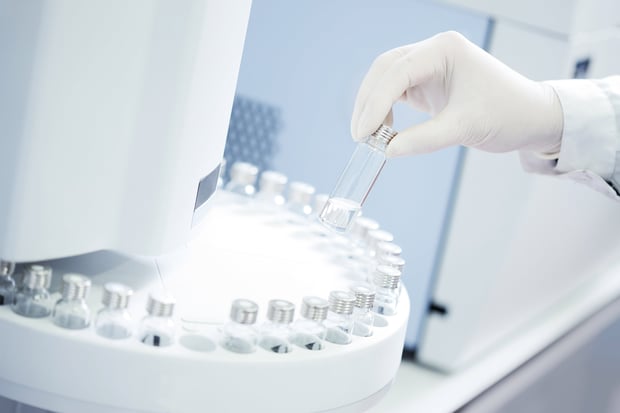
Technician loading sample vials in autosampler rack.

Contaminants & Residues

Where additive analysis intersects with safety – e.g. nitrosamine formation from nitrite or MOSH/MOAH.
Learn More
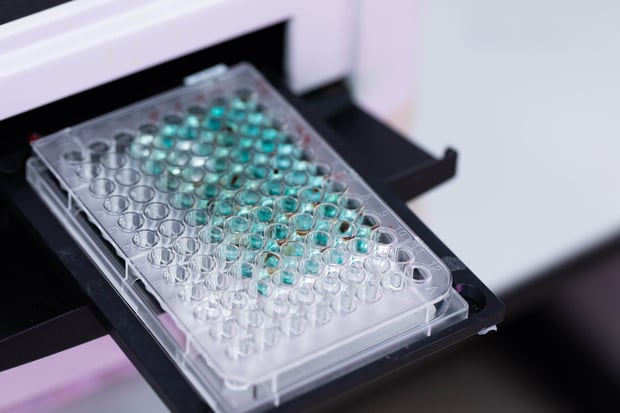
A compact plastic ELISA plate containing small vials filled with green and blue liquid, used for scientific applications.

Bioanalytics – Allergens

Sulphites above 10 mg/kg SO₂ trigger allergen declaration under Regulation (EU) 1169/2011. Combine additive and allergen testing in a single program.

Learn More