
Skip to content

Mycotoxins Analysis

Quantitative determination of all EU-regulated mycotoxins in food, feed, spices, nuts, cereals, and cocoa with express turnaround options.

Sunlit wheat spikelets in a field captured in a panoramic view.

From Regulated Limits to Trace‑Level Quantification –
Mycotoxins in the Food and Feed Chain

A close-up of corn kernels, highlighting their importance as a staple cereal grain for many cultures worldwide.

Mycotoxins are secondary metabolites produced by Aspergillus, Penicillium, Fusarium and Alternaria. They can contaminate crops pre‑ and post‑harvest and remain stable through processing. Many exhibit hepatotoxic, nephrotoxic, immunotoxic or carcinogenic effects; aflatoxin B1 is classified as IARC Group 1.

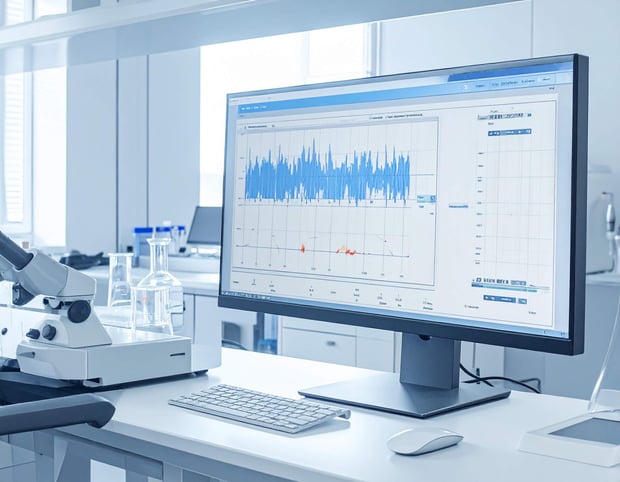
We quantify all regulated and extended mycotoxins using HPLC‑FLD and LC‑MS/MS under ISO/IEC 17025.

Parameter Portfolio

All EU‑regulated mycotoxins plus extended markers –
grouped by producing organism and toxicological relevance.

Aspergillus Toxins

Aflatoxins and ochratoxin A – primarily associated with nuts, oilseeds, spices, cereals, cocoa, coffee, and dried fruits. Includes aflatoxin M1 for dairy products.

Methods: HPLC‑FLD.

Common analytes: Aflatoxins B1 + B2 + G1 + G2, Aflatoxin B1 (single determination), Aflatoxin M1, Ochratoxin A (OTA).

Fusarium Toxins

Trichothecenes, zearalenone, and fumonisins – primarily in cereals such as wheat, maize, and barley. Regulated maximum levels for T‑2/HT‑2 apply EU‑wide; deoxynivalenol remains the most prevalent cereal toxin.

Method: LC‑MS/MS

Common analytes: Deoxynivalenol (DON), Zearalenone (ZEA), T‑2/HT‑2 (sum), Nivalenol (NIV), 3‑Acetyl‑DON / 15‑Acetyl‑DON, Diacetoxyscirpenol (DAS), Fusarenone X, Fumonisins B1 + B2

Analytical Methods

Two complementary platforms – each optimised for different mycotoxin classes, matrices, and sensitivity requirements.
Reference Method

HPLC‑FLD

High‑performance liquid chromatography with fluorescence detection for aflatoxins (B1, B2, G1, G2), aflatoxin M1, and ochratoxin A. Immunoaffinity clean‑up ensures high specificity and consistent quantification at regulatory levels.

Suitable for: aflatoxins (B‑, G‑series, M1), OTA.

Multi-Mycotoxin Screening

LC‑MS/MS

Liquid chromatography with tandem mass spectrometry for simultaneous quantification.

Suitable for: trichothecenes (DON, ZEA, T‑2/HT‑2), fumonisins, modified (masked) forms.

Analytical Interpretation

Key analytical considerations that influence how mycotoxin results are evaluated and interpreted across different matrices.
Close-up of yellow maize kernels arranged on a vibrant blue surface.

Cereals & Bakery Products

Cereals are highly susceptible to Fusarium toxins due to field infection and moisture at harvest. Processing reduces but does not eliminate toxin levels.

Typical applications: Raw‑material checks, Incoming goods control, Baby‑food compliance, Flour and milling monitoring.

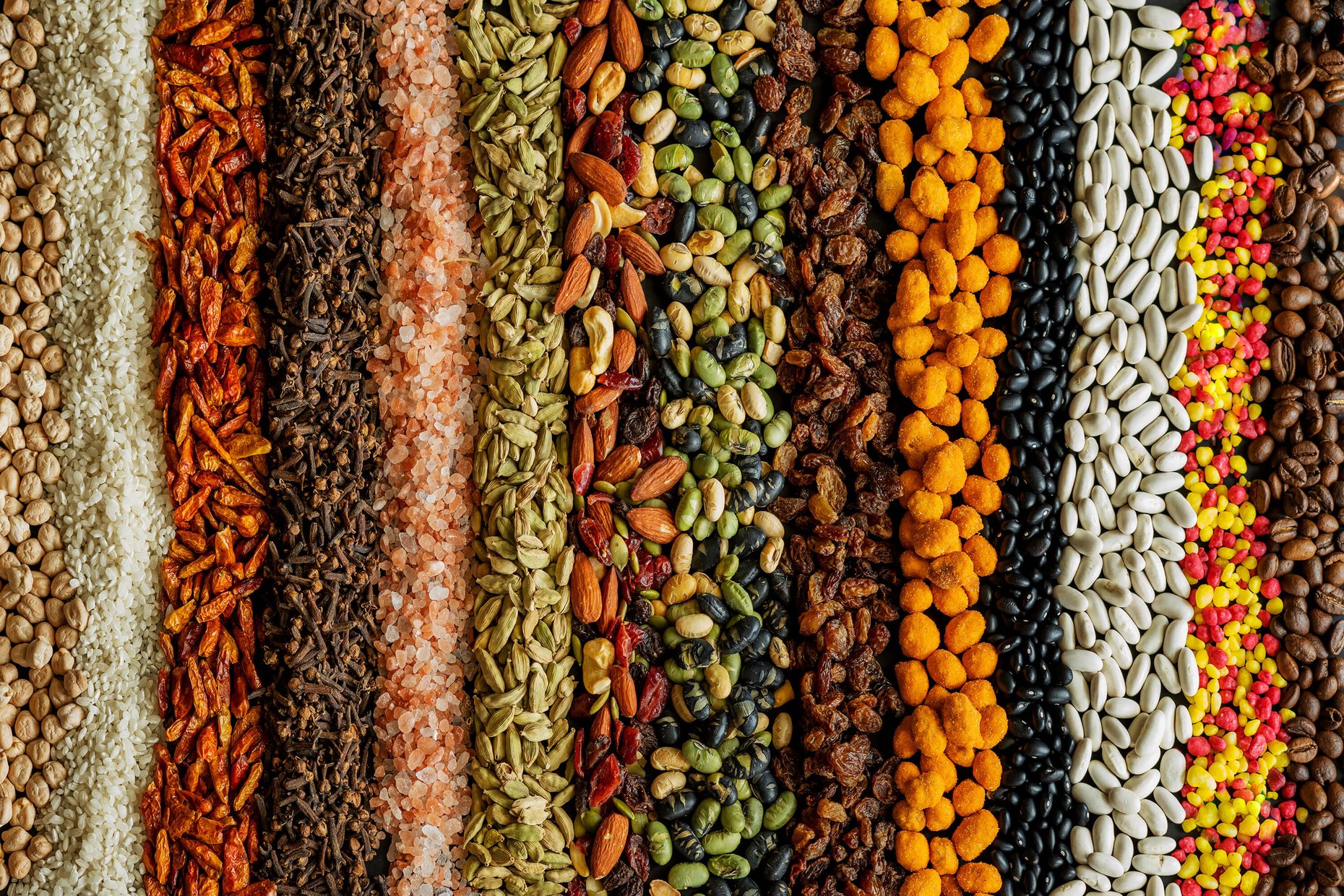
A still life of nuts, legumes, spices, raisins, and coffee arranged in bulk in vertical lines.

Nuts, Oilseeds & Dried Fruits

Warm storage conditions and long supply chains favour Aspergillus contamination; lots often show strong heterogeneity.

Typical applications: Export testing, High‑risk batch screening, Storage monitoring, Release testing for nut and dried‑fruit processors.

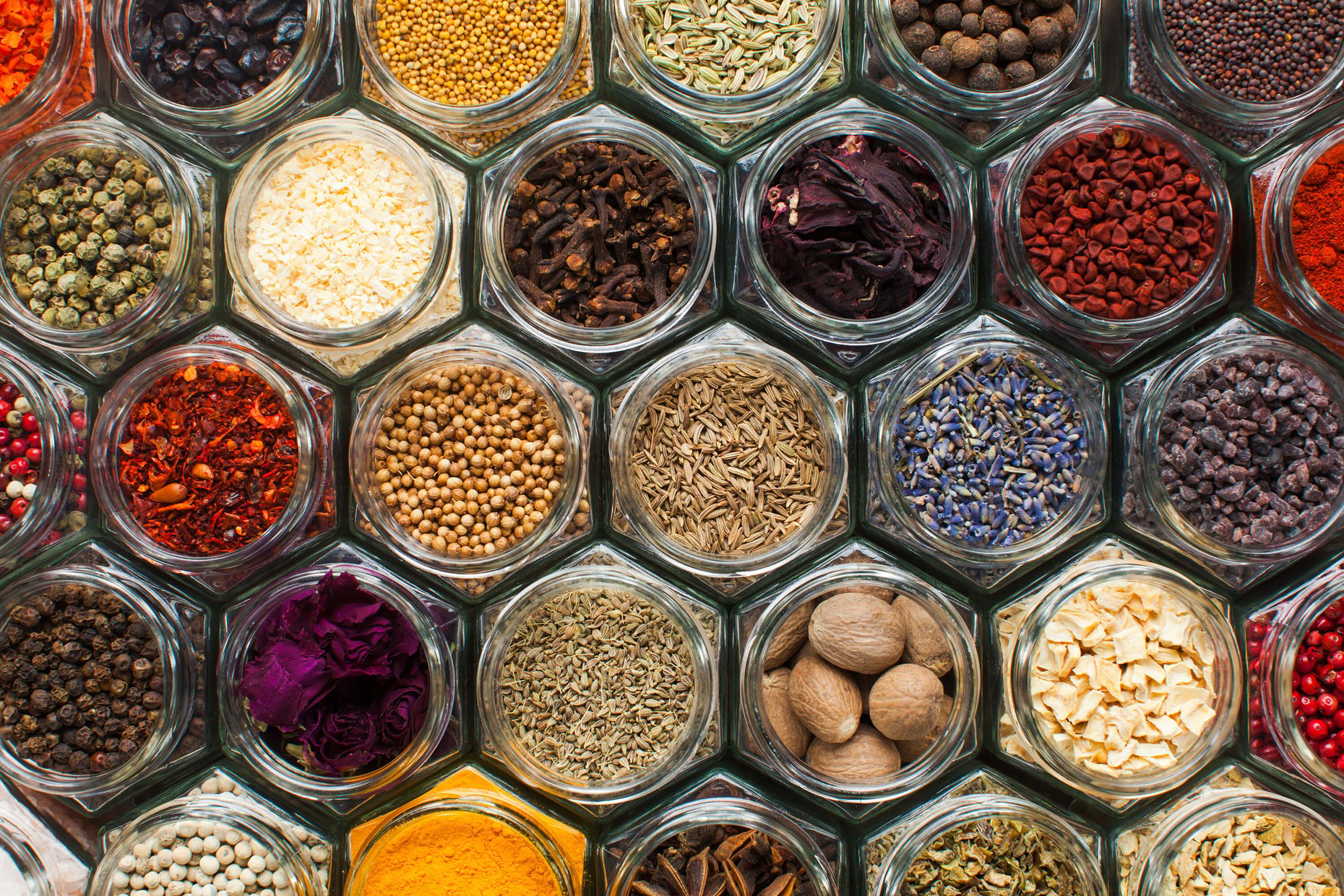
A top view of spice bottles arranged in a patterned composition.

Herbs & Spices

Tropical origin, open‑air drying, and fine grinding increase aflatoxin and OTA risk and often produce uneven contamination profiles.

Typical applications: Supplier verification, Import controls, Blending checks, Retail compliance programs.

A close-up full-frame view of whole cocoa beans.

Cocoa & Coffee

Fermentation, drying and long storage influence OTA formation; roasting has limited effect on toxin stability.

Typical applications: Origin comparison, Batch release, QC of cocoa powders and coffee beans.

Milk powder in spoon with can and baby bottle milk in bowl on wooden table.

Milk & Dairy Products

Aflatoxin M1 reflects the aflatoxin burden of dairy feed; seasonal and feeding‑related variations are common.

Typical applications: Milk surveillance, Dairy processing checks, aflatoxin M1 regulatory compliance.

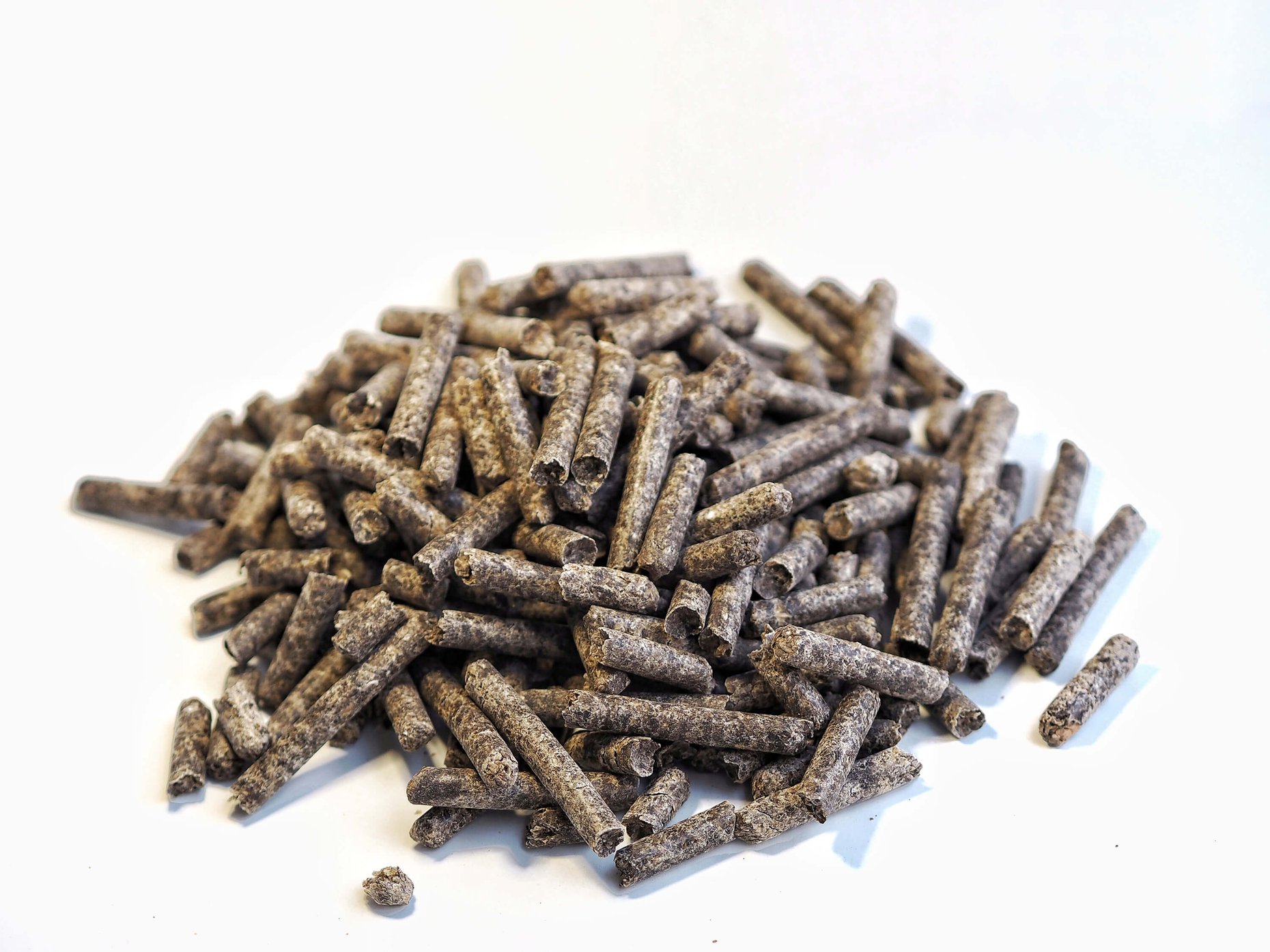
A pile of beetroot pellets as a renewable animal feed source on a white background.

Animal Feed

Feed combines field‑ and storage‑related risks; heterogeneous mixtures require representative sampling for reliable assessment.

Typical applications: Feed‑mill monitoring, Livestock risk assessment, QA programmes, Compliance with Directive 2002/32/EC.

Illustration Law

Regulatory Framework

Regulated under Regulation (EU) 2023/915 defining maximum levels for mycotoxins in food. Matrix‑specific limits and processing effects play a key role in result interpretation.

Related Analytics

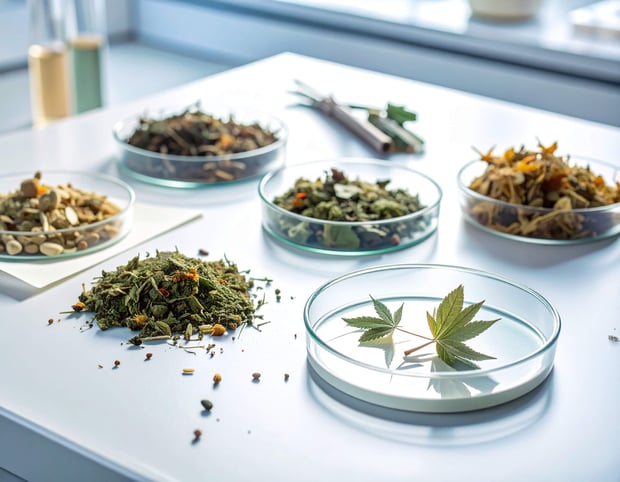
A table displaying various bowls filled with fresh herbs and leaves, highlighting their phytochemical properties.

Phytochemicals & Plant Toxins

Pyrrolizidine alkaloids, tropane alkaloids, opium alkaloids, Δ9-THC/CBD – plant-derived contaminants often co-occurring with mycotoxins in botanical matrices.

Learn More
A computer screen displaying pesticide analysis data in a laboratory setting.

Pesticide Residues

Multi-screening of ~700 pesticides. Fungicide residues (e.g. azoles) are often tested alongside mycotoxins for comprehensive crop quality assessment.

Learn More