
Skip to content

Accredited Analytical Testing

Reliable generation of regulatory‑relevant data, including GMP‑certified testing. Method selection is based on the analyte, sample matrix and applicable requirements.

Structured Analytical Expertise Within One Network

Scientist using a graduated glass pipette, drips a chemical substance into a test tube in science laboratory.

Analytical questions vary significantly depending on analyte, matrix, sensitivity requirements and regulatory context. Addressing them reliably requires more than individual methods or instruments – it requires structured analytical expertise.

Within our accredited network, analytical work is organized into clearly defined disciplines with dedicated specialists and validated methodologies. This ensures that each task is handled using the most appropriate analytical approach, independent of instrumentation availability and aligned with applicable regulatory frameworks.

Analytical Disciplines

Select a discipline to explore available parameters, methods, instrumentation and applicable regulations.
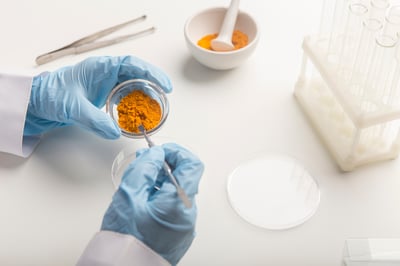
Gloved hands transferring a vivid orange powder sample in a petri dish for laboratory analysis.

Additives

Identification and quantification of food additives, including sugar substitutes, preservatives, antioxidants, flavour enhancers and colourants. Supports compliance verification and labelling accuracy.

Sugar Substitutes · Preservatives · Antioxidants · Flavour Enhancers · Colourants

Learn More
A person holding a pipette next to test tubes in a laboratory setting.

Vitamins

Quantitative determination of fat‑soluble and water‑soluble vitamins in foods, supplements, infant nutrition and pharmaceutical raw materials using HPLC, LC‑MS/MS and microbiological assays.

Vitamins A, D, E, K · B‑Group · Vitamin C · Folate

Learn More
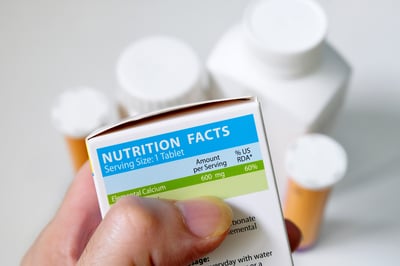
Hand examining a nutrition facts label on supplement packaging to assess nutritional information.

Nutrition

Nutritional profiling for labelling compliance under the EU Food Information Regulation (LMIV), including Big Seven, extended declarations, fatty acid spectra and energy calculation.

Big Seven (Energy, Fat, Saturates, Carbohydrates, Sugars, Protein, Salt) · Fatty Acid Profiling · Fibre

Learn More
Laboratory sensory evaluation of cacao beans with samples arranged in bowls for aroma testing.

Sensory

Trained panels perform objective evaluation of taste, aroma, texture and appearance. Supports product development, shelf-life studies and complaint investigations.

Descriptive Profiling · Difference Testing · Shelf-Life Sensory · Complaints

Learn More
Elements_&_Ions_@ifp-1

Elements & Ions

Determination of heavy metals, minerals, trace elements, anions and cations via ICP‑MS, AAS and ion chromatography for safety compliance and nutritional declarations.

Heavy Metals (Pb, Cd, Hg, As) · Minerals (Ca, Mg, K, Na, P) · Trace Elements (Fe, Zn, Cu, Se, Mn, I) · Anions & Cations

Learn More
A laboratory scene with various vials and an autosampler machine, indicating a setup for scientific experiments.

Contaminants & Residues

Screening and quantification of pesticides, mycotoxins, MOSH/MOAH, process contaminants and environmental contaminants including PFAS using LC‑MS/MS and GC-MS.

Mycotoxins · Pesticide Residues · MOSH/MOAH · Process Contaminants (Acrylamide, 3-MCPD, Glycidol) · Environmental Contaminants (PFAS, PCBs)

Learn More
Close up on hands of unrecognizable scientist in vinyl gloves dripping liquid from pipette into petri dish studying microbiology at light table in laboratory.

Microbiology

Detection, enumeration and identification of microorganisms in food, water, pharmaceuticals and production environments — from hygiene indicators to sterility.

Pathogens · Spoilage · Hygiene Indicators · Legionella · Identification (MALDI-TOF, FT‑IR, Sequencing) · Endotoxins · Sterility

Learn More
Scientist person research writing document bioanalytical science study in modern laboratory, professional female doctor working on medical test lab note.

Bioanalytics

Molecular and immunological testing for allergens, GMO and species identification using real-time PCR, ELISA and enzymatic test kits. Includes allergen management and cleaning validation support.

Allergens · GMO · Species ID

Learn More
Gloved hands of researcher dropping liquid substance on green leaf in petri dish.

Phytochemicals

Analysis of secondary plant metabolites and plant toxins, including alkaloids, coumarins and other bioactive compounds. Supports safety assessments for teas, spices, honey and herbal products.

Tropane & Pyrrolizidine Alkaloids · Caffeine · Coumarin · HCN · Morphine & Codeine

Learn More

Instrumentation & Methods

All nine disciplines use a shared ISO/IEC 17025-accredited instrumentation suite operated by specialist teams.
InstrumentationScope
LC‑MS/MS & GC‑MSPesticides, mycotoxins, contaminants, phytochemicals
GCxGC‑TOF‑MS & LC‑GCxGC‑TOF‑MS/FIDMOSH/MOAH confirmation, source tracing
ICP‑MS & AASMulti‑element analysis incl. heavy metals, minerals, trace elements
Real-time PCRGMO, allergens, species ID, pathogens
ELISAProtein-based allergen quantification and screening
MALDI‑TOF & FT‑IRRapid microbial identification and cluster analysis
HPLC‑UV/DAD/FLDVitamins, additives, amino acids, sugars, organic acids
Ion chromatography, FT-IR spectroscopyAnions, cations
SEM‑EDXForeign body identification

Method selection is based on analyte, matrix, regulatory requirements and detection limits.

Supporting Services

Integrated services that complement your analytical programme.
Food samples and packaged products being logged and labeled in a laboratory with barcode scanning and documentation system.

Sample Reception

Intake, registration and full traceability via LIMS.

Learn More
Telephone consultation with a lab expert advising a customer on testing and analysis results.

Expert Consulting

Troubleshooting, process optimisation and method development.

Learn More
Group of scientists working in science laboratory.

Kit Production

Ready-to-use sampling and analytical kits from development to validated production.

Learn More