
“May contain traces” – a practice that will not stay as it is
Anyone responsible for quality assurance in food production knows the dilemma well: a laboratory result is available – but what it means from a regulatory perspective, whether a PAL statement must appear on the packaging or can be omitted, remains open to interpretation. The answer depends on whom you ask.
To this day, there is no EU-wide harmonised regulation for precautionary allergen labelling. Regulation (EU) No 1169/2011 governs the declaration of the 14 allergens subject to mandatory labelling as ingredients – but for unintentional presence through cross-contamination, no harmonised requirements exist. The result: “may contain traces of peanuts” appears on products where there is no traceable source of contamination. At the same time, PAL statements are missing where they would be justified. For allergy sufferers, this is a genuine safety issue; for manufacturers, it is a growing compliance risk – as FoodDrinkEurope documented in their 2024 PAL position paper.
This is now changing. The European Commission is currently working on an implementing regulation based on Article 36 of Regulation (EU) 1169/2011, which would introduce the first EU-wide harmonised rules for PAL. A public consultation is expected in the coming months, with adoption targeted for Q4 2027.
European countries are already showing where this is heading: the Netherlands put a new PAL directive into effect on 1 January 2026, based on quantitative risk assessments and reference doses. Spain is pursuing a similar approach.
The practical implication: anyone marketing products in the Netherlands must already work with quantitative analytical data – no longer with the qualitative “detected/not detected”.
Brief primer: what are food allergens?
Food allergens are proteins that trigger an immunological reaction in sensitised individuals. The clinical consequences range from mild skin irritation and gastrointestinal symptoms to life-threatening anaphylaxis. Critical for analytical purposes: even traces in the low mg/kg range can provoke a reaction in highly sensitised individuals.
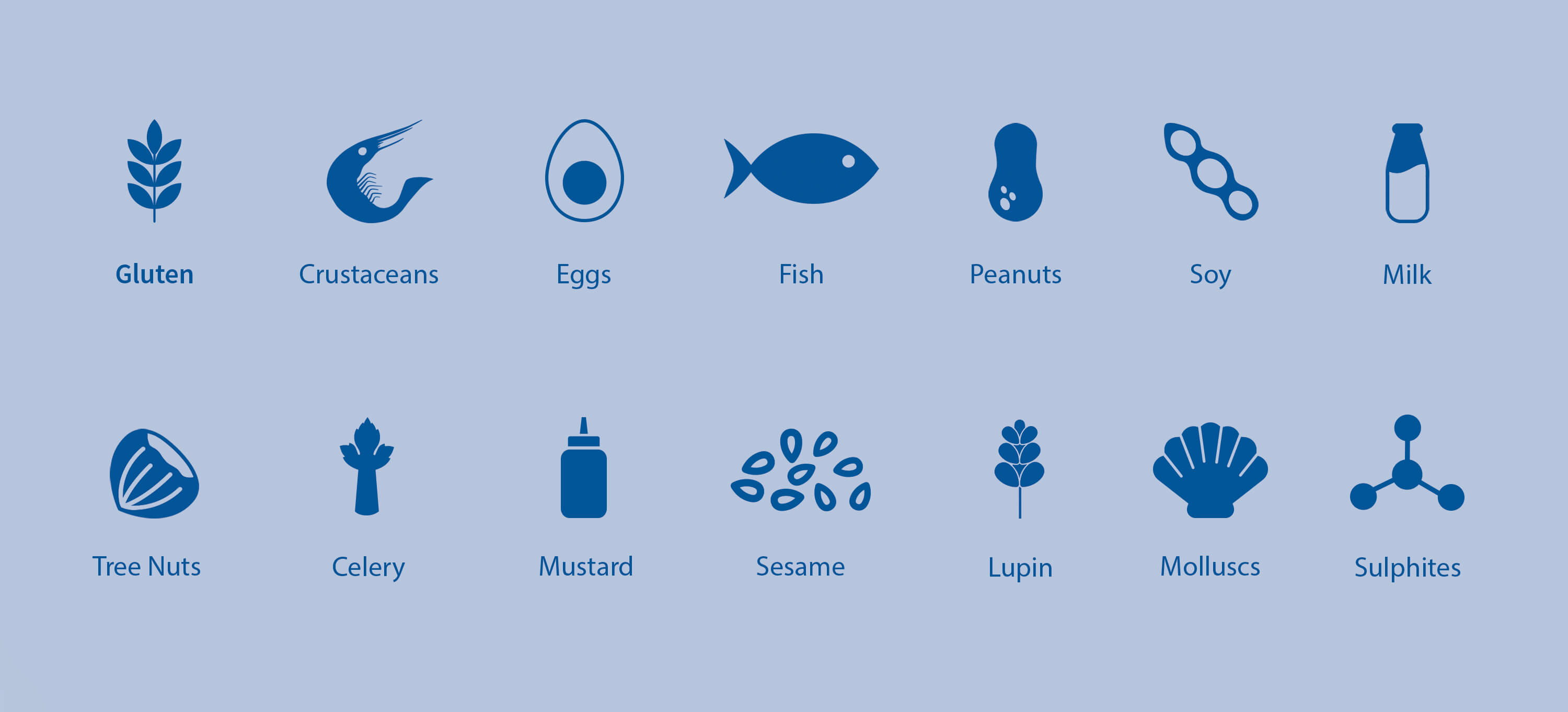
The EU currently regulates 14 allergens subject to mandatory labelling under Annex II of Regulation (EU) No 1169/2011 for ingredients:
Entry pathways: where do undeclared allergens come from?
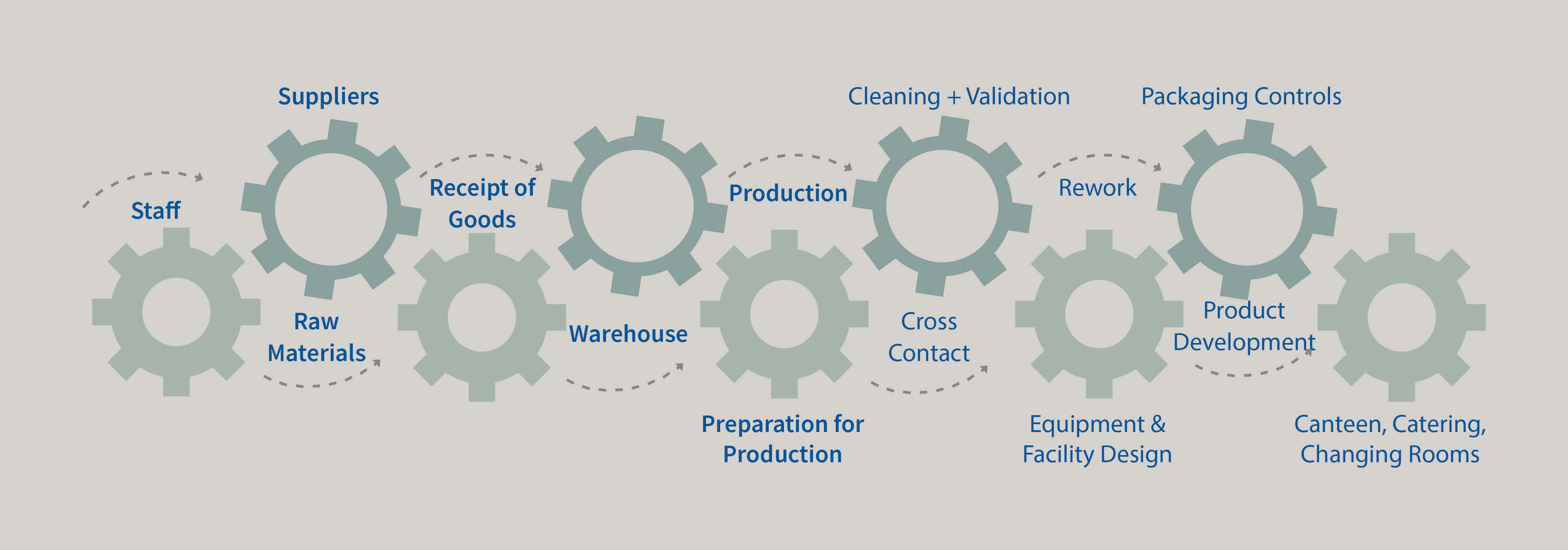
In everyday food manufacturing, the entry pathways are far more diverse than they might appear at first glance. Cross-contamination during production – shared lines, inadequate cleaning after product changeovers – is one possible source, but by no means the only one.
Raw material contamination is frequently underestimated: ingredients can already be contaminated during cultivation, harvest, transport or storage – for example, cereals from silos that also store soy or lupin.
The updated EFSA guidance on allergenicity assessment (2025) discusses these entry pathways in the context of novel foods and alternative protein sources – a topic of growing practical relevance given the expanding market for plant-based products.
For manufacturers, this means: reliable allergen analysis must not only cover the finished product but systematically include raw materials, semi-finished products and environmental samples. This requires validated methods across a broad range of matrices – and a laboratory that can actually deliver this breadth.
The scientific basis: FAO/WHO reference doses and VITAL 4.0
The key innovation underlying the forthcoming regulation is the shift from a qualitative to a quantitative approach. Until now, the question was: “Is the allergen present?” In the future, it will be: “Is the concentration above or below a defined threshold?”
The groundwork was laid by the joint FAO/WHO Expert Consultation (JECRA), which between 2022 and 2023 produced five reports establishing reference doses, action levels and recommendations. The second report (FAO/WHO 2022, Part 2) defined thresholds for the eight priority allergens; the fifth report (FAO/WHO 2023, Part 5) added further allergens including celery, lupin and mustard. The central concept is the Eliciting Dose 05 (ED05) – the dose of allergenic protein at which a maximum of 5% of the allergic population may experience a mild to moderate reaction.
| Allergen | FAO/WHO Reference Dose (ED05, mg protein) |
|---|---|
| Peanut | 2.0 |
| Milk | 2.0 |
| Egg | 1.0 |
| Hazelnut | 3.0 |
| Soy | 1.0 |
| Wheat | 3.0 |
| Cashew | 2.0 |
| Walnut | 1.0 |
| Sesame | 1.0 |
An important practical point: the ED05 is not a concentration but an absolute amount, expressed in mg of protein per portion or eating occasion. Converting this into analytically useful concentrations (mg/kg) depends on the portion size of the product in question – and this is precisely where the interpretive competence of a skilled analytical service provider becomes essential.
The Allergen Bureau in Australia and New Zealand with their VITAL system (Voluntary Incidental Trace Allergen Labelling) has translated reference doses into a practical tool. VITAL 4.0, released in August 2024, defines action levels based on the ED05:
| Action Level | Meaning | PAL Consequence |
|---|---|---|
| Action Level 1 | Low concentration, low probability of reaction | No PAL statement required |
| Action Level 2 | Significant concentration, significant probability of reaction | PAL statement required |
The new Dutch PAL directive also works with the ED05, aligned with the FAO/WHO recommendations. The pattern is clear: the ED05 will be the basis for PAL trace labelling decisions – and manufacturers who want to be on the safe side need analytical partners who can work with it confidently.
The regulatory framework
EU implementing regulation on PAL (Article 36 of Regulation (EU) No 1169/2011)
This is the central initiative. In the future, PAL should only be applied on the basis of a documented, quantitative risk assessment – in line with the Dutch approach. The current practice of using PAL “as a precaution”, without analytical or process-related substantiation, will no longer be permissible. Food business operators will need to demonstrate that precautionary labelling is not being used as a substitute for adequate preventive measures. The wording of PAL statements is also set to be standardised.
In practice, this means: manufacturers who have previously relied on qualitative statements from their analytical partners will in future require robust quantitative data – concentrations in mg/kg, referenced to their specific matrix and portion size. An analytical report that merely states “not detected” will no longer suffice for a documented risk assessment.
The analytical challenge: why not every method is sufficient
Which methods deliver reliable results under the forthcoming requirements? The answer depends – and this is not an evasion but a central quality criterion – on the product, the matrix and the question being asked.
ELISA – the workhorse with known limitations
The immunological ELISA test (Enzyme-linked Immunosorbent Assay) remains the method of choice for many applications and among specialists: commercially available test kits, good sensitivity (typically 0.5–1 mg/kg allergenic food), quantifiable results and high throughput. For numerous routine applications, ELISA continues to be the first choice – as the position paper of the German Society for Food Chemistry (GDCh) on allergen analysis confirms.
However, processing effects and cross-reactions in food manufacturing need to be considered. Heat treatment, fermentation, hydrolysis – all of these alter the protein structure and can impair antibody binding.
Cross-reactivity in ELISA should be known and can under certain circumstances lead to false-positive results. Structurally similar proteins – such as between pistachio/cashew or mustard/rapeseed – are well-known examples.
Real-time PCR – specific, stable, complementary
The molecular biological PCR test (Polymerase Chain Reaction) does not detect the allergenic protein but specifically targets DNA. It is therefore an indirect detection of the allergenic food. On first consideration, this seems like a detour – and indeed there are legitimate objections: DNA is not the trigger of the allergic reaction, the inference from DNA content to protein content is not straightforward, and highly processed foods such as oils, gelatine or starch contain barely any amplifiable DNA. For milk and egg, PCR is limited in its informative value because it only detects bovine or chicken DNA, not the specific allergenic proteins, and is therefore unsuitable for these applications.
DNA is also susceptible to processing and degrades in a similar way to protein. At the same time, PCR is highly specific and delivers unambiguous identification of the allergen. Furthermore, multiplexing (detection of multiple DNA species in a single reaction) allows the detection of several allergens in one run – and for allergens such as celery or fish, where ELISA availability is limited, PCR is frequently the better option.
At ifplabs, the combination of ELISA + PCR for mutual confirmation has proven itself – a practice that the GDCh position paper paper explicitly recommends. Because we not only apply both methodological platforms but also develop and produce our own ELISA and PCR kits, we have a deep understanding of where each method reaches its limits – and how to address those limits methodologically.

Lateral flow tests – useful, but only as a supplement
For in-house allergen management, immunological lateral flow rapid tests are a valuable addition. Results in 10 minutes, without laboratory equipment, directly at the production line – this is useful for allergen verification after cleaning or during product changeovers. However, as the basis for a regulatory-grade risk assessment, they do not replace laboratory analysis.
Methods compared
The three methods compared at a glance:
| Method | Application | Strengths | Limitations |
|---|---|---|---|
| ELISA | Routine quantification | Established, sensitive, quantitative, direct protein detection | Matrix effects during processing, cross-reactivity, kit variability, single parameter |
| Real-time PCR | Confirmation screening | Established, specific, sensitive, multiplexing, semi-quantitative | No direct protein detection, limited for milk/egg, matrix effects during processing |
| Lateral flow | On-site screening | Established, qualitative detection, fast, no lab required, production-line use | Qualitative only |
What the new regulation means for your products in practice
Five questions that manufacturers and QA managers should be asking now:
1. Does my analytical laboratory deliver quantitative data? Under the planned PAL directive, robust mg/kg figures will become mandatory.
2. Are my detection limits aligned with the reference doses? If the ED05 for peanut is 2.0 mg protein per portion and the portion size is 50 g, the laboratory must reliably detect 40 mg/kg peanut protein. At a portion size of 500 g, the target concentration drops to 4 mg/kg – analytically more demanding. For allergens with a lower ED05 such as sesame (1.0 mg) or egg (1.0 mg), the requirements become even tighter.
3. Is the method validated for my specific matrix? Baked products, fermented goods, heavily heated matrices – in all these cases, a method validated for a different matrix can lead to incorrect results. Matrix-specific validation is not a luxury but a methodological duty of care.
4. Do I have access to confirmatory analysis – in case of dispute? When an ELISA result is unexpectedly positive or a supplier questions a finding, a second method is invaluable. The combination of ELISA and PCR covers many of these scenarios.
5. Is my allergen management system documented and does it identify and quantify the risk? First, a functional allergen management system; then, quantitative assessment; and from that, a derived precautionary allergen labelling for cross-contamination – this is the coming principle.
How ifplabs prepares manufacturers for the new requirements
At ifplabs, we have a constellation that is rare in allergen analysis: we are simultaneously a provider of analytical services at multiple sites in Germany and the UK – and a developer and manufacturer of our own ELISA and PCR kits, including customer-specific solutions. This is complemented by on-site consulting on allergen management, with over 20 years of experience across all sectors.
This means: when we validate a method, we understand the antibody chemistry behind the kit. When we identify matrix effects, we can not only report the result but explain why they occur – and whether adjusting the methodology or switching methods is the better solution. And when a customer cannot find a suitable standard kit for their specific matrix or their specific allergen, we develop something tailored together.
Our expertise in allergen analysis covers:
- ELISA analysis for all EU allergens, including matrix-specific validations for heavily processed foods
- Real-time PCR for species- and allergen-specific detection, with multiplexing capacity and matrix validation
- In-house kit development and production – standard and customised solutions for ELISA and PCR
- Quantitative risk assessment based on FAO/WHO reference doses and VITAL 4.0
- Consulting and training on allergen management systems, cleaning validation and regulatory compliance
We support food manufacturers, suppliers and retail companies not only with analytical results, but with the methodological and regulatory context that makes those results decision-relevant.
Conclusion
PAL regulation is no longer a future project – it is an ongoing process that is already a reality in national markets. The shift from inconsistent PAL practices to a science-based system with reference doses and action levels changes what manufacturers need from their analytical partners: not just a result, but a robust basis for decision-making.
Those who begin now to set up their allergen management quantitatively – with validated methods, documented risk assessments and an analytical partner who commands both method development and regulatory interpretation – are not just compliant. They are well positioned.
- Bird & Bird (2026): EU to harmonise “May Contain” allergen labels – new rules expected by Q4 2027
- FoodDrinkEurope (2024): Precautionary Allergen Labelling – Position Paper (PDF)
- Précon Group (2025): New allergen policy (PAL) 2026 – the Netherlands
- FAO/WHO (2022): Risk Assessment of Food Allergens – Part 2: Review and establish threshold levels in foods for the priority allergens
- FAO/WHO (2023): Risk Assessment of Food Allergens – Part 5: Review and establish threshold levels for specific tree nuts, soy, celery, lupin, mustard, buckwheat and oats
- Allergen Bureau (2024): VITAL 4.0 – Voluntary Incidental Trace Allergen Labelling Program
- EFSA (2025): Enhancing allergenicity risk assessment for novel foods in the EU
- GDCh / Lebensmittelchemische Gesellschaft: Position paper on allergen analysis (PDF, German)
- EFSA: Food allergens – overview page
- Regulation (EU) No 1169/2011: Regulation on the provision of food information to consumers
- WHO: Ad hoc Joint FAO/WHO Expert Consultation on Risk Assessment of Food Allergens – overview