
A recall that shook the industry
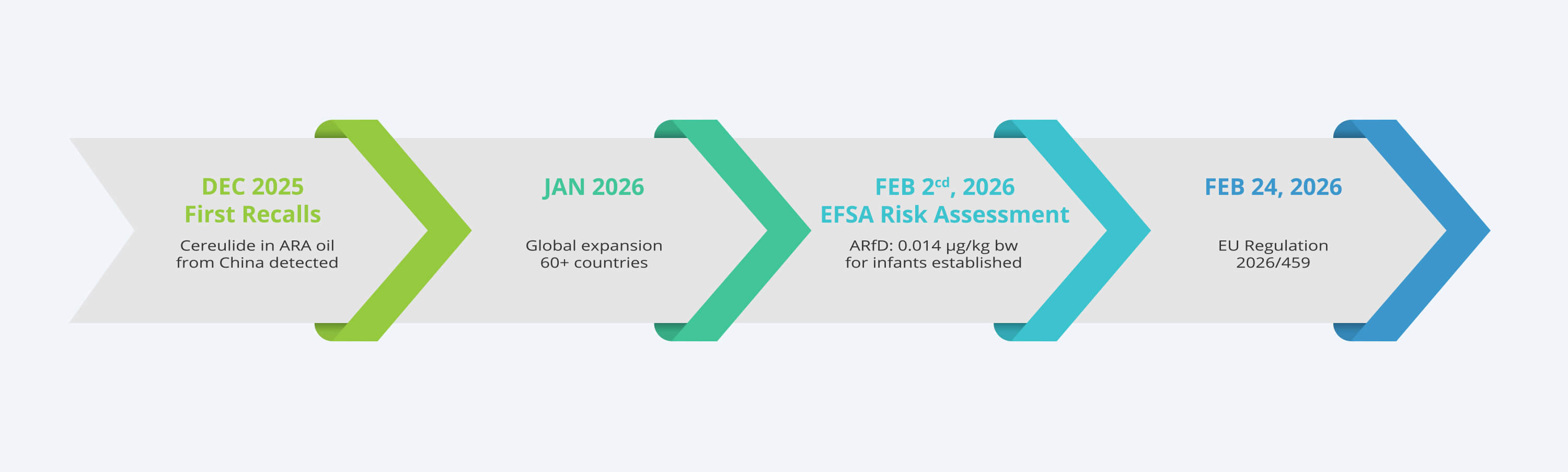
Since December 2025, one of the largest recalls in the infant nutrition sector in recent history has been underway. Products from several international manufacturers – including Nestlé, Danone, Lactalis and Hochdorf – are affected in over 60 countries worldwide. The trigger was the detection of cereulide in arachidonic acid oil (ARA oil) from a single Chinese supplier. The oil is added to infant formula as a source of polyunsaturated fatty acids, which are essential for nervous system development and vision.
The European Commission responded immediately, tasking EFSA with a risk assessment that was published on 2 February 2026. An acute reference dose (ARfD) of 0.014 μg/kg body weight for infants was established.
Particularly significant: the contamination did not occur in the finished product and not through bacterial growth, but through the toxin already formed in an upstream ingredient.
The Bacillus cereus group
The Bacillus cereus group comprises closely related gram-positive, endospore-forming, facultatively anaerobic rod-shaped bacteria, including B. cereus sensu stricto, B. thuringiensis, B. anthracis and further species.
In food, B. cereus strains cause two main syndromes:
- Emetic syndrome: nausea and vomiting caused by cereulide
- Diarrhoeal syndrome: diarrhoea caused by enterotoxins such as haemolysin BL, formed in the gut
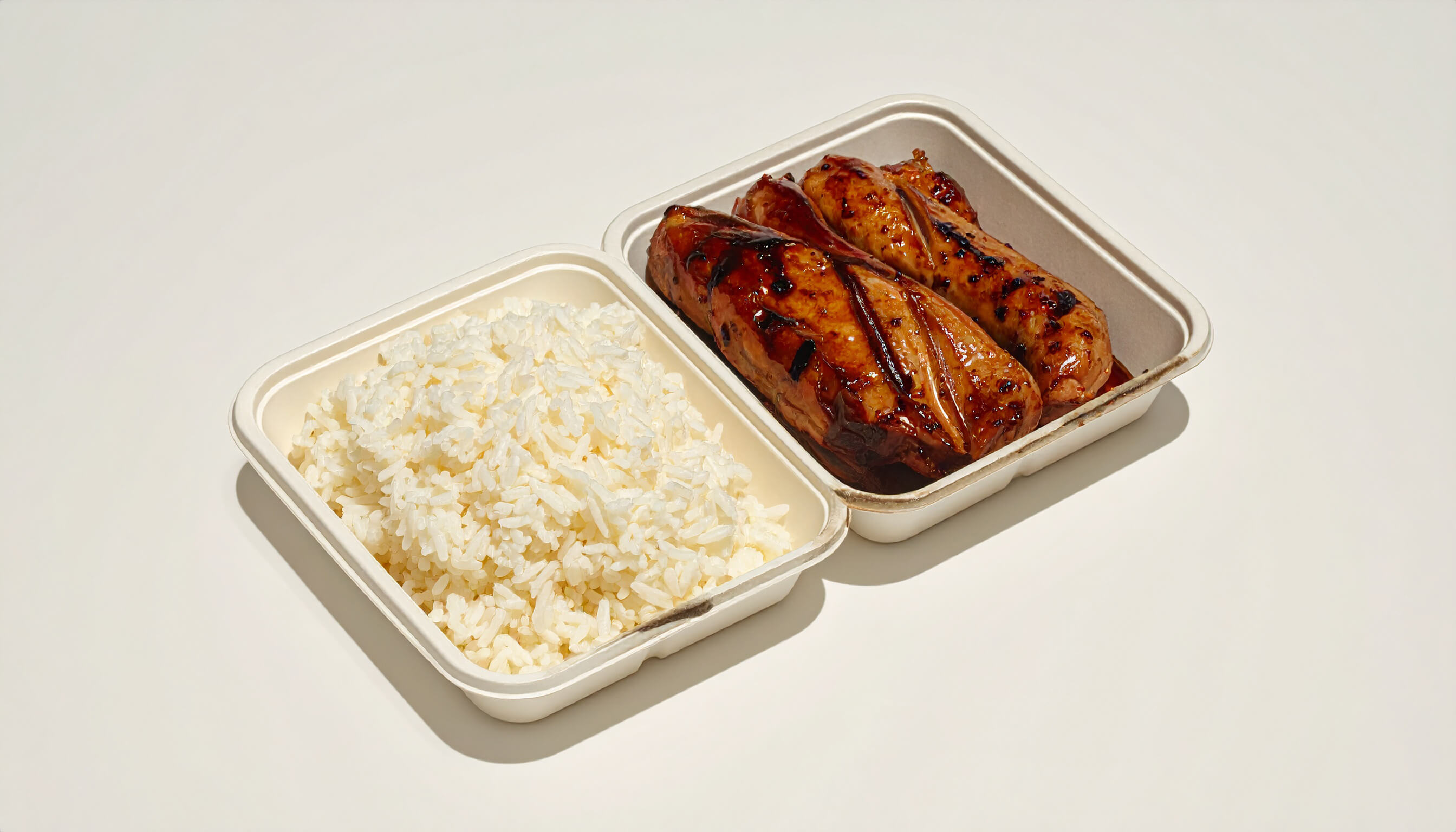
Emetic strains are typically associated with starchy, heated and subsequently improperly cooled foods such as rice dishes, while diarrhoeal episodes occur with a broad spectrum of heated foods (meat, vegetables, dairy products, sauces, etc.).
Why is cereulide so dangerous?
Cereulide is produced by emetic strains of the Bacillus cereus group. Only a small proportion of all B. cereus strains carry the ces gene, which encodes the cereulide synthetase and enables toxin production in the first place
The toxin is not formed in the human body but already in the food. Cereulide formation in food is influenced by several factors, particularly moisture content, pH, salt concentration and storage temperature. The availability of nutrients and the presence of competing microorganisms also play a decisive role.
Particularly critical are starch- and protein-rich foods such as rice, pasta, potato products (gnocchi), dairy products (infant formula) and spice blends.
Cereulide is characterised by several properties:
- Extreme heat stability: cereulide withstands temperatures above 100 °C for more than two hours
- Chemical resistance: it is stable against acids and proteolytic enzymes. Even gastric acid and digestive enzymes cannot break it down
- Persistence in food: once the toxin has formed, it cannot be removed from the product by processing. The bacterium may long since be killed – the toxin remains
These properties are the reason why hygiene failures before toxin formation are critical, and why subsequent heat treatment of the finished food is not an adequate corrective measure.
Symptoms typically appear within 0.5–6 hours – primarily nausea and severe vomiting. Complaints usually subside after 24 hours.
Key point: An unremarkable colony count is not a reliable indicator of product safety. Particularly with cereulide, a toxin risk can exist despite microbiologically unremarkable results. Where necessary, further targeted analysis is required for a robust assessment.
What does EFSA say? The new risk assessment in detail
The rapid risk assessment published by EFSA on 2 February 2026 (EFSA Journal 2026:9941) establishes for the first time a quantitative toxicological reference point for cereulide in infants:
| Parameter | Value |
|---|---|
| Acute reference dose (ARfD) | 0.014 μg/kg body weight |
| Acute consumption value – 24h exposure (infant formula) | 260 mL/kg body weight |
| Acute consumption value – 24h exposure (follow-on formula) | 140 mL/kg body weight |
This means: cereulide concentrations in reconstituted infant formula above 0.054 μg/L (or above 0.1 μg/L for follow-on formula) can already exceed the ARfD.
Why standard B. cereus testing is not enough
In most laboratories, Bacillus cereus is examined according to established ISO methods:
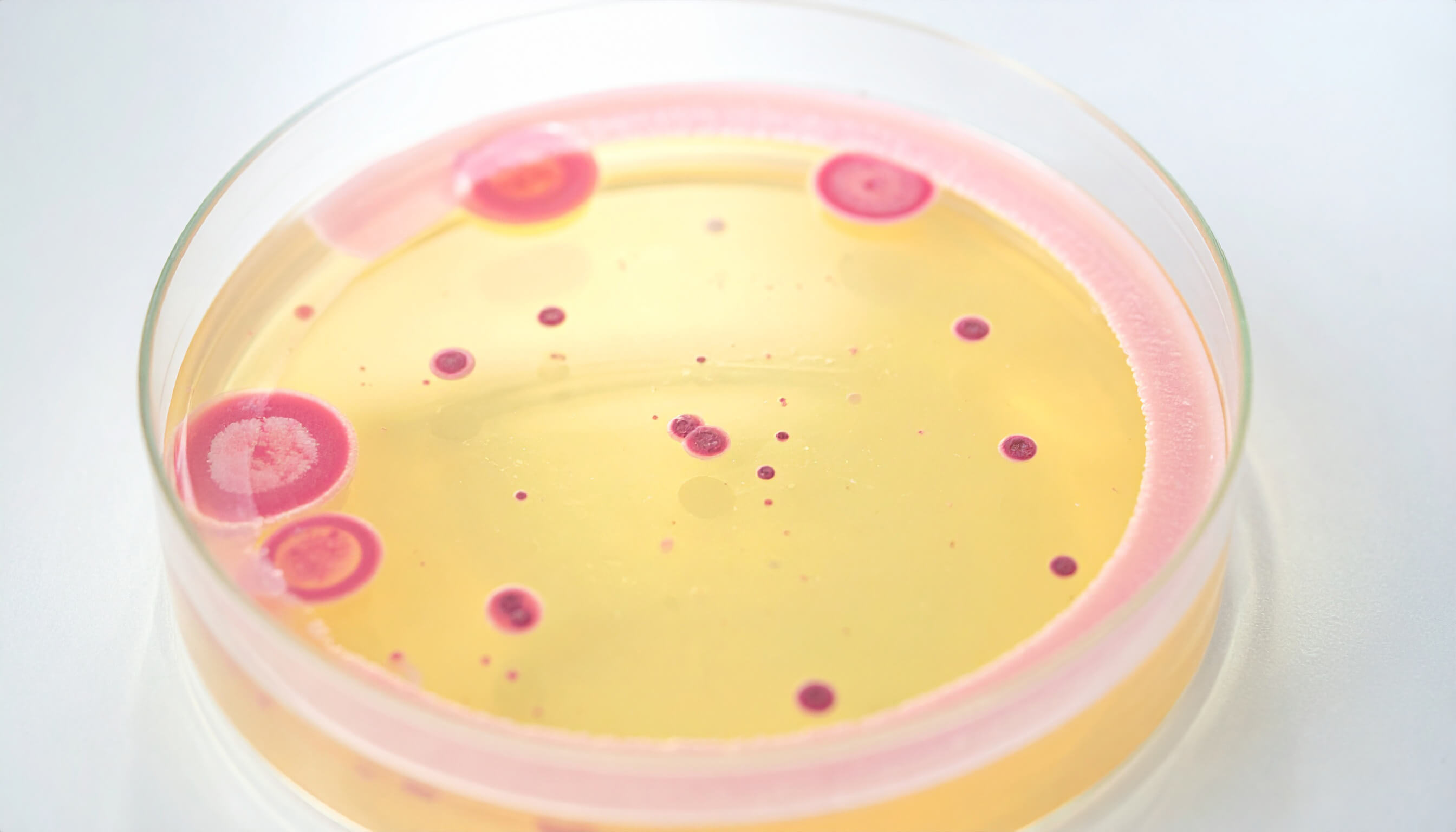
ISO 7932: colony count on MYP agar (mannitol-negative, lecithinase-positive)
This method is a proven approach for reliably detecting the presence and quantity of presumptive B. cereus in a product. It provides an important basis for hygienic assessment and indicates whether a microbiological burden exists.
However, this method does not differentiate between emetic and diarrhoeal strains. The BfR explicitly points out in its opinion that cereulide does not necessarily have to be formed in the finished product but can enter food via contaminated ingredients.
Colony count ≠ toxin content
Cereulide formation does not correlate linearly with colony count. This means: even when the method reliably shows whether and in what quantity B. cereus is present, it is not possible to infer from this whether cereulide is present in the product or whether a concrete toxicological risk exists. For this question – and therefore for the assessment of whether further measures are required – additional targeted analysis is necessary.
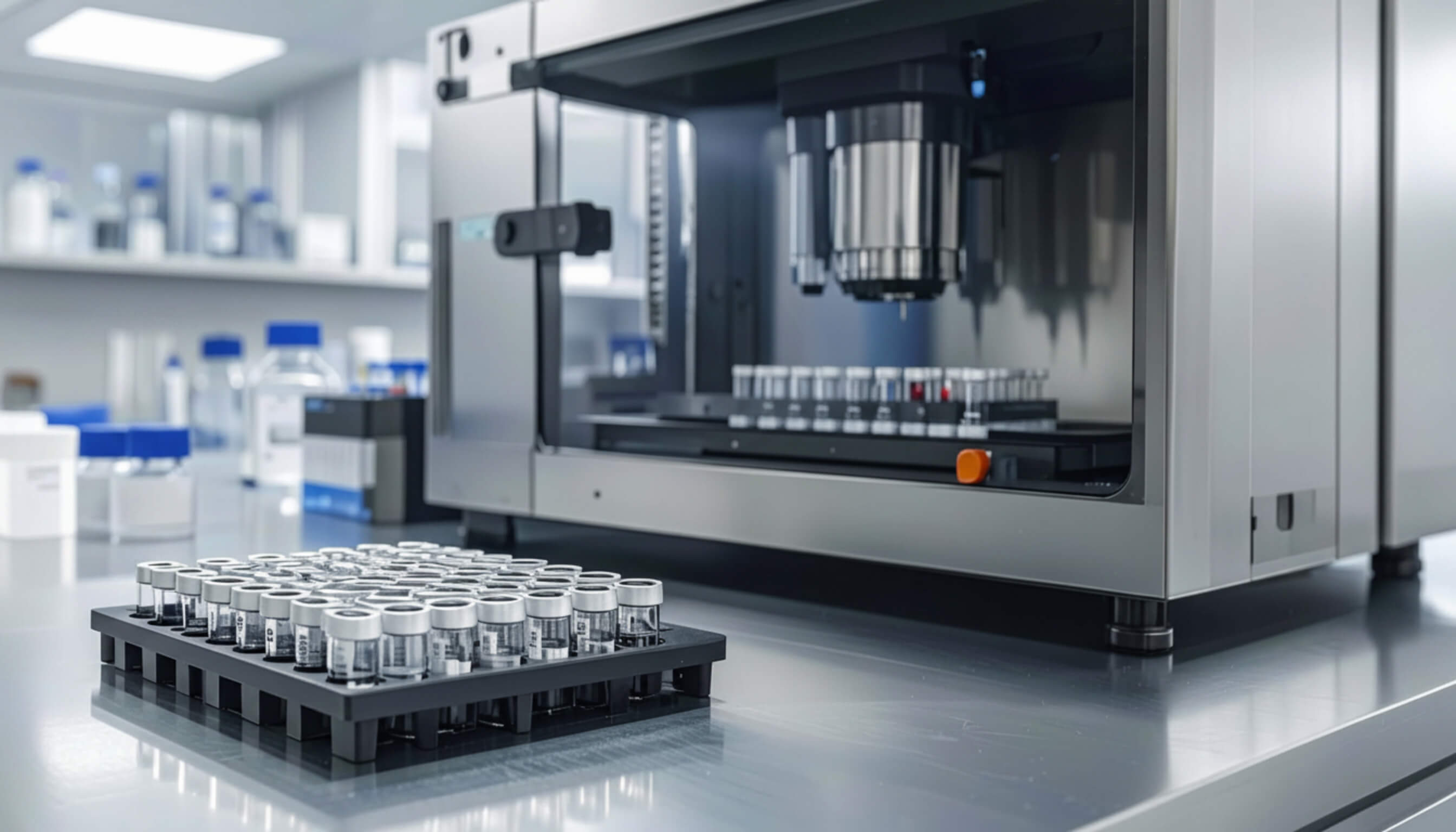
Cereulide analysis: LC-MS/MS – the gold standard for toxin detection
ISO 18465:2017 describes the quantitative determination of cereulide by HPLC or UHPLC coupled with tandem mass spectrometry (LC-MS/MS). The method uses ¹³C₆-labelled cereulide as an internal standard.
We perform these analyses routinely, providing a highly sensitive and specific method to complement standard Bacillus cereus testing and specifically determine whether cereulide is actually present in the product.
Extract of our limits of quantification:
| Product | Limit of quantification [μg/kg] |
|---|---|
| Infant food | 0.18 |
| Arachidonic acid powder | 0.08 |
| Arachidonic acid oil | 0.12 |
Regulatory background
The EFSA risk assessment represented the first step in risk management.
On 24 February 2026, the European Commission adopted Implementing Regulation (EU) 2026/459, amending the existing Implementing Regulation (EU) 2019/1793. This regulation governs the temporary reinforcement of official controls and emergency measures on the entry of certain goods from certain third countries. The amendment provides for targeted tightening of controls and specific measures at EU borders for arachidonic acid oil originating from China.
Since 26 February 2026, every consignment of ARA oil from China must be presented at border control posts, where it is subject to documentary checks and – at a 50% frequency – physical and identity checks. Every consignment must also be accompanied by laboratory analyses and an official certificate confirming the absence of cereulide toxin.
Conclusion and outlook
Due to the particular properties of cereulide – especially its high stability and the absence of a direct correlation with colony counts – standard Bacillus cereus testing alone is not sufficient to assess actual product safety.
Anyone who wants to ensure that no toxicologically relevant risk from cereulide exists should complement their testing with specific toxin analysis by LC-MS/MS. Only this approach can reliably determine whether the toxin is present in the product.
Against this backdrop, it is advisable to expand existing monitoring concepts accordingly, in order to detect potential risks early and avoid recalls as well as reputational damage.
It should also be noted that arachidonic acid oil is used not only in infant formula but also in other product groups such as dietary supplements. A potential problem can therefore be relevant beyond these product categories.
- EFSA (2026): Rapid risk assessment on acute reference dose (ARfD) of cereulide in infants. EFSA Journal 2026:9941
- EFSA / ECDC (2026): Precautionary global recall of infant nutrition products following detection of Bacillus cereus toxin
- EFSA / ECDC (2026): Rapid Outbreak Assessment – cereulide incident, likelihood of exposure low
- European Commission (2026): Implementing Regulation (EU) 2026/459 – reinforced controls on ARA oil imports from China
- ISO 18465:2017: Microbiology of the food chain – Quantitative determination of emetic toxin (cereulide) using LC-MS/MS
- In’t Veld et al. (2018): Elaboration and validation of the method for the quantification of the emetic toxin of Bacillus cereus as described in EN-ISO 18465
- EFSA (2016): Risks for public health related to the presence of Bacillus cereus and other Bacillus spp. in foodstuffs. EFSA Journal 2016;14(7):4524
- BfR (2020): Bacillus cereus bacteria in food can cause gastrointestinal disease. Opinion No. 048/2020 (PDF, German)
- Delbrassinne et al. (2024): Validation of a Targeted LC–MS/MS Method for Cereulide and Application in Food and Faeces