
The Gemba Walk was sobering – and, at the same time, a beginning
When an external Lean consultant walked through our campus laboratories in early 2025 – observing, documenting, asking questions – the findings confirmed what many in the teams had long known: the potential for optimisation was there. Some improvements were already under way. But the list of possible measures was long, and the resources to drive real change alongside day-to-day operations were scarce.
That was the first big lesson: Recognising potential is not enough. You need to know which opportunities to tackle first.
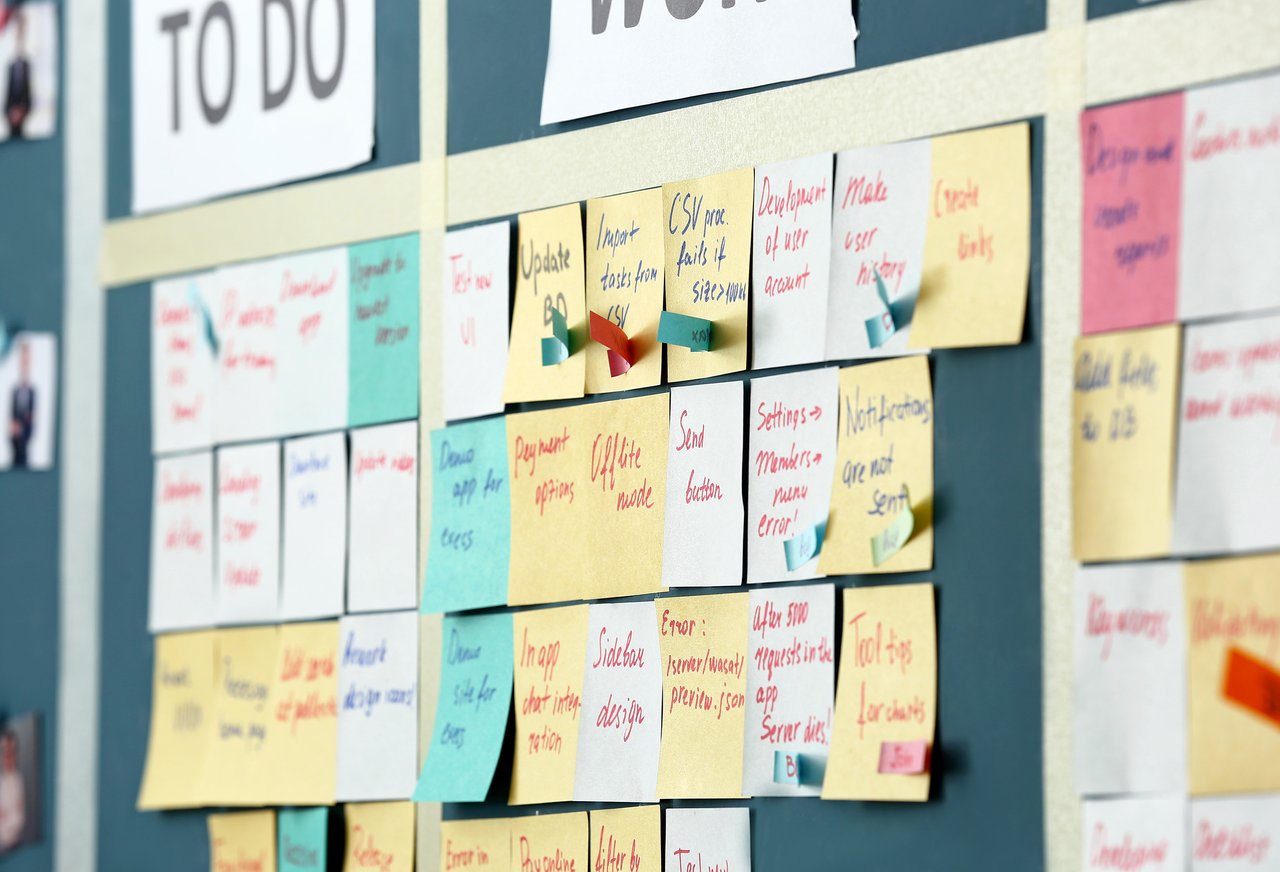
The breakthrough came through a holistic visualisation of processes across all laboratories on the campus – interfaces, critical bottlenecks: everything at a glance. Suddenly it was not only visible where things were getting stuck, but also which changes would have the greatest impact. In a joint session with department heads, the next steps were prioritised. Since then, work has been focused – instead of trying to do everything at once.
This is Lean in the laboratory. Not a sprint. A marathon. And we are right in the middle of it.

The starting point: Good, but not good enough
Continuous efficiency improvement is a stated objective of many organisations. It sounds self-evident, yet in practice it proves more demanding than it first appears.
Individual departments and teams generally work very solidly and with high commitment. There is no shortage of ideas for improvement. The real challenge, however, arises where processes interconnect: at interfaces, in coordination across departmental boundaries and in the prioritisation of joint initiatives. When multiple initiatives are pursued simultaneously and resources are limited, larger changes easily stall.
In retrospect, a recurring pattern became apparent: too many parallel initiatives without consistently clear priorities. High activity was long equated with progress – an approach that proved unsustainable.
Lean enabled a shift in perspective here. Instead of implementing as much as possible at the same time, deliberate prioritisation and a clear focus on the initiatives with the greatest added value move to the foreground.
Sometimes it’s the small things
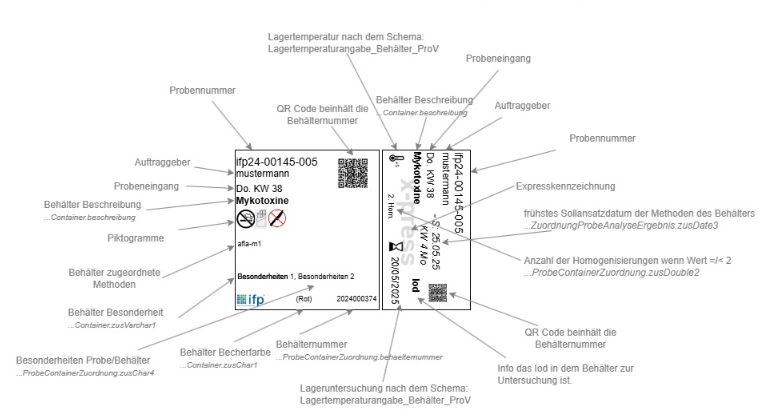
An example from sample preparation: previously, only the deadline was noted on the container labels. Staff had to calculate for themselves when preparation needed to be completed. In the laboratory, too, the calculation was repeated to ensure the sample would be analysed on time. Today, the target preparation date is printed directly on the labels. No mental arithmetic, no looking things up. In addition, all other relevant information is now included on the label as well – so that everything essential is visible at a glance.
Another example: switching from sample containers with screw caps to ones with separate lids. One fewer hand movement – thousands of times a day. Small changes that make a noticeable difference to the daily laboratory routine.
All information at a glance
Lean methods in practice: Where to start?
Lean management in the laboratory sounds convincing in theory. In practice, however, a central question quickly arises: Where do you begin?
Our answer was deliberately simple: small, concrete and visible. Although “small” is often easier said than done. The sheer number of potential starting points can feel overwhelming. What mattered, therefore, was not the perfect start but starting at all. Along the way there were misunderstandings, detours and learning curves – and it was precisely from these that important insights emerged.
1. Creating transparency and measurability
A first central step was to make relevant aspects of daily work measurable. Instead of relying exclusively on experience and subjective assessments, robust metrics were suddenly available.
This fundamentally changed the nature of discussions: decisions could be made on the basis of facts, priorities justified transparently. Challenges became visible – not as opinions, but as a shared reality. This created a solid foundation for targeted improvements.
Lean principle: You can only improve what you measure. Turnaround times, error rates, waiting times – without a baseline, nothing can be substantiated and nothing compared.
2. Creating structure – through clear sub-goals
Rather than implementing a comprehensive initiative all at once, the overall objective was broken down into manageable stages. Clear sub-goals help to reduce complexity, clarify responsibilities and make progress visible.
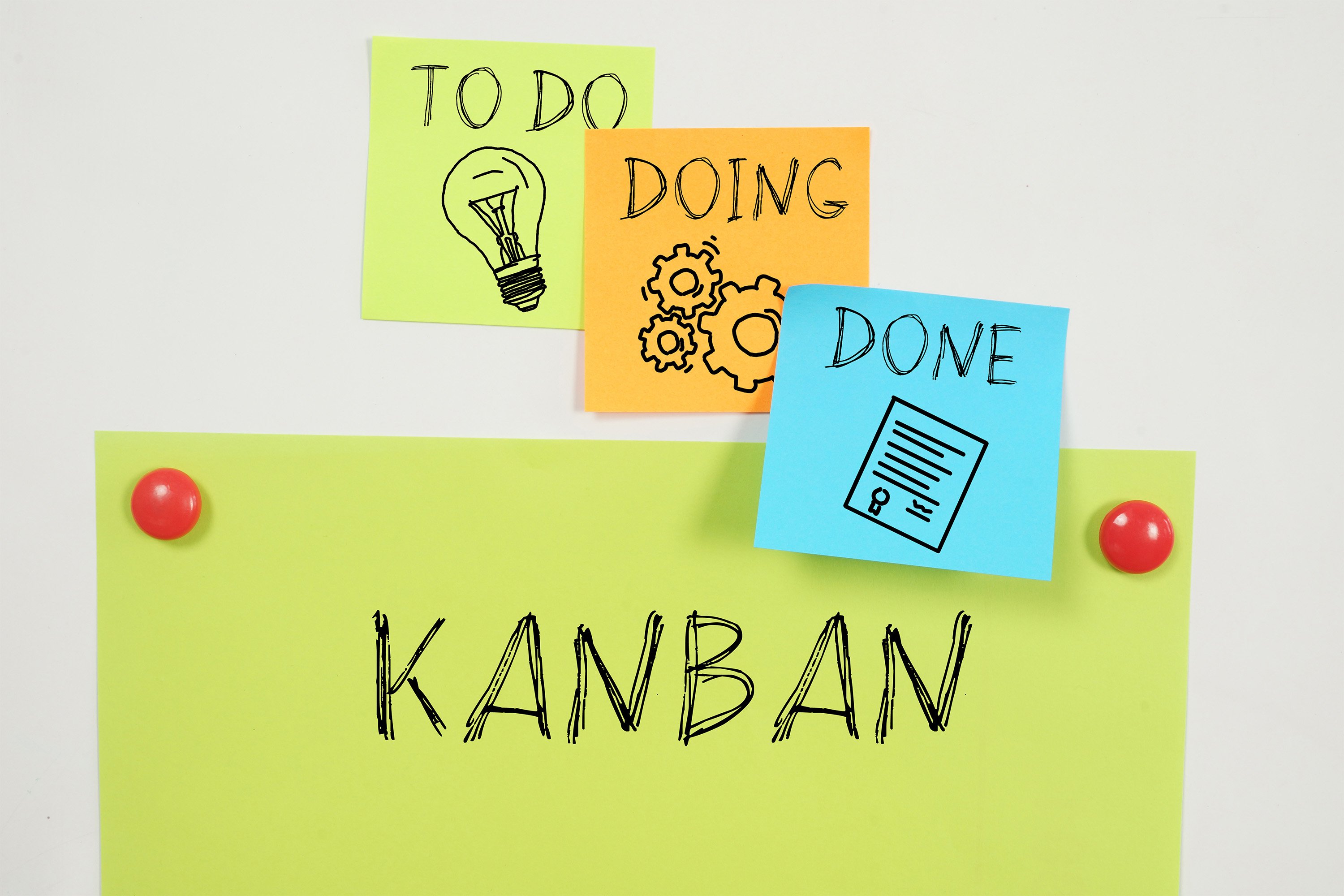
At the same time, we learned that structure itself can become a challenge. An overly ambitious start with several parallel initiatives created more coordination effort than orientation. Only the deliberate shift towards simpler, more visual management brought the desired clarity: less formal planning, more transparency in day-to-day work.
The lesson was clear: Structure is not an end in itself. It must be simple enough to support the work – not add to the burden.
3. Retrospectives – pausing regularly
One of the most effective measures in a Lean context is regularly pausing with intention. In retrospectives, teams reflect together on their collaboration and workflows: What is working well? Where does friction arise? And what is concretely changed?
The key to success lies in the setting. Small, stable and thematically focused groups create the conditions for open conversations and robust outcomes. Groups that are too large or constantly changing, on the other hand, make genuine reflection difficult. Retrospectives achieve their full impact where they are understood as a continuous learning format – not as a one-off measure.
4. SMART goals – clarity as a prerequisite
A central learning point in the Lean process was the importance of clearly formulated goals. General intentions such as “become more efficient” provide a direction but remain too vague to concretely steer or evaluate progress.
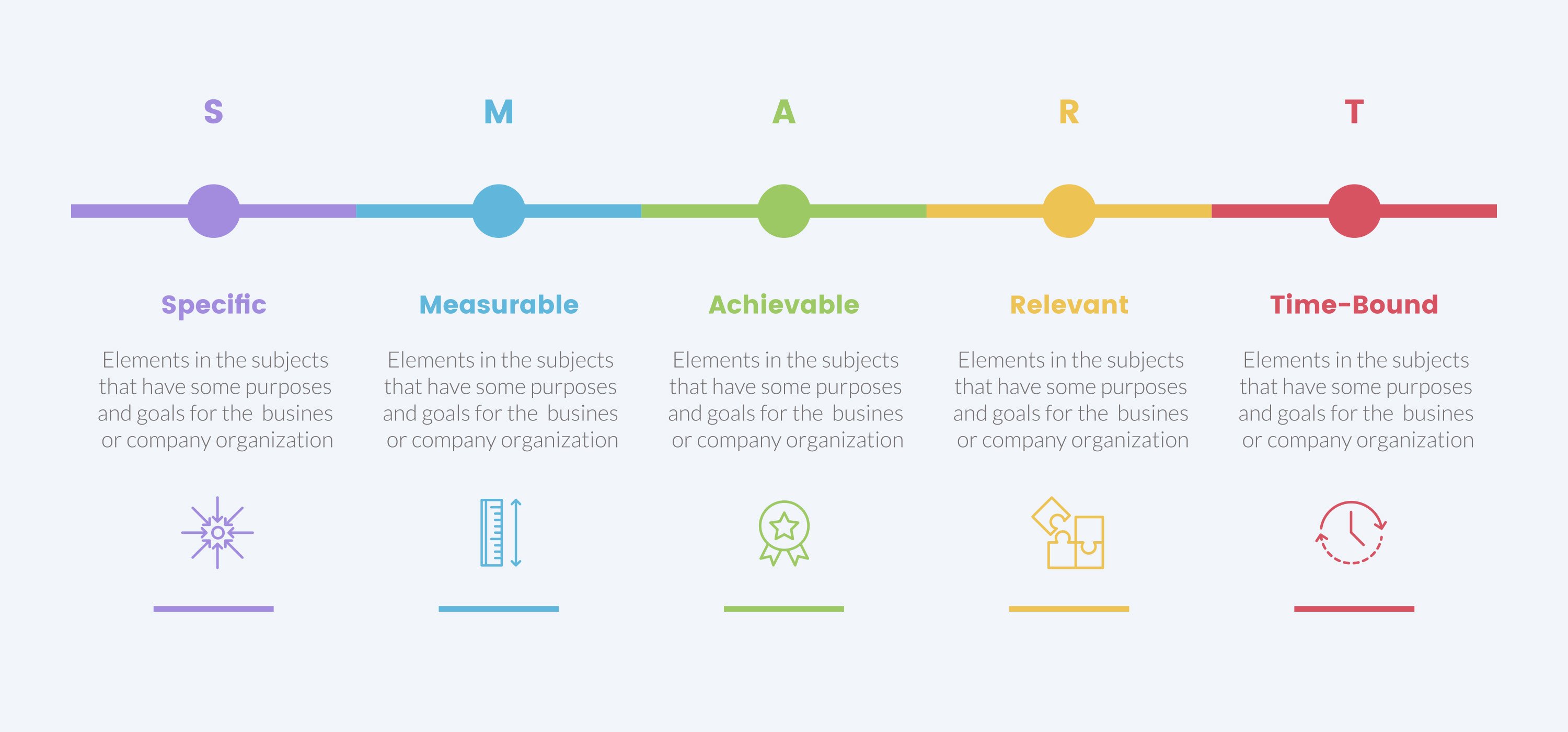
The SMART goals framework offers a helpful structure here: goals are described specifically, made measurable and placed within a timeframe. In practice, however, this clarity does not emerge automatically. It requires discipline, deliberate alignment and the willingness to consider different perspectives as equally valid.
This process is demanding and takes time. With each iteration, however, the shared understanding of what is to be achieved – and how success is actually measured – continues to grow.
Lessons learned
Lean gave us fewer new answers than better questions. From the continuous process of reflection, these central lessons emerged:
Measurability creates clarity.
As long as discussions are based on impressions and individual perceptions, they often remain inconclusive. Reliable metrics help to ground conversations and make decisions transparent.
Different perspectives are equally valid.
Divergent viewpoints do not mean someone is wrong. They are often an indication that goals have not yet been formulated clearly enough or understood collectively.
Better to clarify goals too often than misunderstand once.
Many assumptions about a shared understanding only reveal themselves as misleading in hindsight. Deliberately asking – what exactly is meant and what should concretely change – pays off in the long run.
Resistance is rarely a fundamental “no”.
Reluctance or objections often point to open questions, missing prerequisites or risks. Those who understand what is needed for an improvement reach viable solutions faster.
Change takes time.
Lean is not a project with an end date, but a continuous learning process. It requires patience, openness and the willingness to address uncomfortable observations honestly.

Recommendations for laboratories starting with Lean
From our initial experience with Lean, a number of recommendations have emerged that proved particularly helpful for getting started. Our four most important recommendations:
Start small, make successes visible.
Rather than changing large structures immediately, it is worth starting with a clearly defined workstation or process. Visible improvements build trust – and form the foundation for the next step.
Measurability before methodology.
Before introducing methods or tools, transparency about the current state should be established. Turnaround times, error rates or search effort provide an objective basis. Without baseline values, progress remains difficult to substantiate.
Secure backing from leadership.
Lean is more than operational optimisation. Sustainable change requires support at management level – both as a signal to the organisation and to prioritise the necessary resources.
Communicate more than you initially think is necessary.
Lean means change. And change requires explanation, repetition and dialogue. Open communication and an invitation to actively participate significantly increase acceptance and impact.
Conclusion
Lean management in the laboratory does not mean that everything runs perfectly from a certain day onwards. It means you have stopped accepting that things are “just the way they are”.
In school we were taught: minimum effort, maximum yield. Back then it sounded like a strategy for slackers. Today we know: it is the core idea behind Lean. Not doing less – but doing the right things. Deliberately. With focus. With an eye on what truly matters.