
Skip to content

Spoilage Organisms Testing

Accredited detection, identification and assessment of
spoilage organisms affecting shelf life, sensory quality and process stability.

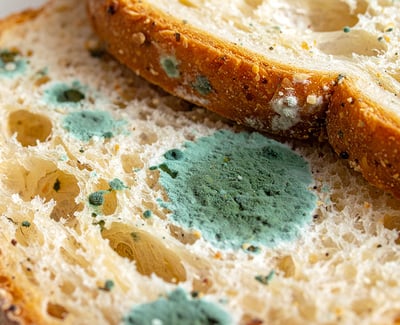
Microscopic view of mold growth and fungal structures associated with food spoilage and reduced shelf life.

Spoilage Organisms: Early Detection for Stable Product Quality

Mold growth causing food spoilage — a source of quality loss and reduced shelf life.

Spoilage microorganisms are among the most important factors affecting food quality and shelf life. Their early detection helps identify potential quality defects such as off-flavours, gas formation, turbidity, texture changes and pH shifts before products reach the end of their intended shelf life.

We support food manufacturers and processors with the reliable detection, identification and assessment of spoilage organisms across a wide range of food categories, including dairy products, beverages, meat products and plant-based foods. Accreditation to DIN EN ISO/IEC 17025 provides the basis for scientifically robust results supporting shelf-life validation, process verification and quality assurance.

Spoilage Risk Management in Food Production

Early identification of spoilage organisms helps maintain product quality, extend shelf life and support stable production processes.
Reliable monitoring provides valuable insights for preventive quality management across the food and feed supply chain.
Icon of protective gloves representing risk assessment of critical product groups.

Process Hygiene Assessment

Assessment of production processes with increased risk of microbiological contamination and premature product spoilage.

Supports the identification of hygiene weaknesses and process conditions that may contribute to reduced shelf life and quality defects.

Test tube icon representing sampling and microbiological monitoring.

Sampling and Monitoring

Representative sampling of products, surfaces and production environments to evaluate microbiological quality trends.

Provides reliable data for environmental monitoring, process control and the early detection of spoilage risks.

Microorganism icon representing identification of typical spoilage organisms.

Spoilage Organisms Identification

Detection of microorganisms associated with sensory deterioration, reduced shelf life and product instability.

Supports the differentiation of spoilage-related bacteria, yeasts and moulds and enables targeted quality risk assessment.

HACCP certification icon representing integration into HACCP systems and food safety management.

Integration into HACCP Systems

Microbiological quality data support preventive measures and continuous improvement programs.

Provides a scientific basis for HACCP verification, critical control points, documentation requirements, audits and complaint reduction.

Parameter Portfolio

Our analytical portfolio covers key spoilage indicators and spoilage organisms relevant to product quality, shelf life and process stability. Depending on the product category, sample matrix and analytical objective, different methods are applied to support quality assurance, shelf-life assessment and root-cause investigations.

Total Microbial Count

Assessment of overall microbiological contamination as an indicator of hygiene satus, product quality, and spoilage risk.

Methods: Spread plate, pour plate and membrane filtration methods.

Results: CFU/g, CFU/ml and CFU/plate for the assessment of product quality, hygiene status and shelf-life.

Differentiation of Spoilage Organisms

Detection of typical groups of microorganisms such as lactic acid bacteria or yeasts.

Methods: Selective media, real-time PCR, MALDI-TOF-MS.

Results: Taxonomic identification and classification according to spoilage potential and impact on product stability.

Environmental Monitoring

Assessment of production areas, equipment and processing environments as potential sources of spoilage organisms.

Methods: Surface sampling using contact plates and swabs according to DIN EN ISO 18593.

Results: Identification of contamination sources and assessment of hygiene conditions.

Analytical Methods

The choice of analytical method depends on the target organism, sample matrix and quality objectives. Culture-based methods, microbial identification techniques and environmental monitoring approaches complement each other to provide reliable assessment of spoilage risks and product stability.
Enumeration of Microbial Load

Total Microbial Count

A widely used indicator of microbiological quality, hygiene conditions and spoilage risk. The method supports shelf-life studies, process monitoring and routine quality control.

Suitable for: Shelf-life validation, hygiene verification, quality monitoring, process control and trend analysis.


Identification of Spoilage Organisms

Selective Cultivation & Microbial Identification

Selective cultivation and identification methods enable the differentiation of spoilage-related microorganisms and support the assessment of spoilage mechanisms within specific product categories.

Suitable for: Lactic acid bacteria, yeasts, molds, acetic acid bacteria, Bacillus spp. and other spoilage-associated microorganisms.

Rapid Differentiation

Real-Time PCR & MALDI-TOF MS

Molecular and protein-based identification methods enable rapid differentiation of spoilage organisms and support targeted investigations into product instability and quality defects.

Suitable for: Species identification, confirmation testing, spoilage investigations and stability assessments.


Environmental Monitoring

Production & Environmental Control

Monitoring of production environments, equipment and contact surfaces helps identify potential sources of spoilage microorganisms and supports preventive quality assurance measures.

Suitable for: Environmental monitoring, sanitation verification, HACCP programs and quality management systems.

Sample Matrices & Application Areas

Our methods cover a broad spectrum of food, feed, and environmental matrices. Method selection depends on the target organism,
sample matrix, product characteristics and the expected spoilage mechanisms.

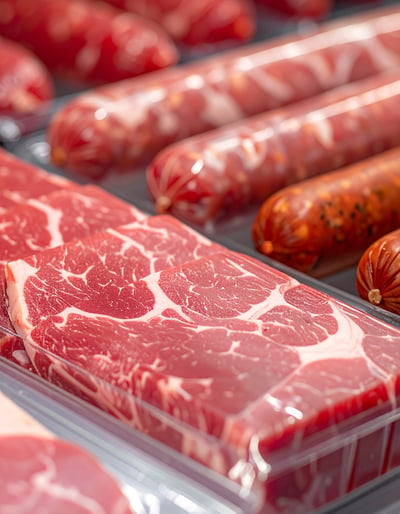
Fresh meat products used for microbiological spoilage testing and quality assessment.

Meat, Poultry & Processed Meat Products

Assessment of spoilage-related microorganisms affecting sensory quality, shelf life and product stability.

Typical samples: Fresh meat, minced meat, poultry, cooked meats, cured meats, sausages and ready-to-eat products.

Typical applications: Shelf-life studies, process hygiene verification, complaint investigations, root-cause analysis and quality monitoring.

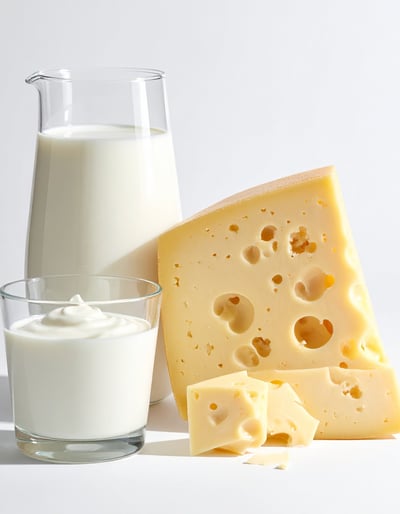
Dairy products including milk, cheese and yoghurt for spoilage organism testing and shelf-life assessment.

Dairy Products

Microbiological assessment of products with elevated susceptibility to fermentation defects, acidification, gas formation and reduced shelf life.

Typical samples: Raw milk, pasteurized milk, cheese, yoghurt, dairy desserts, whey products and milk powder.

Typical applications: Shelf-life validation, raw milk verification, quality assurance, complaint investigations and process optimization.


Beverage samples used for spoilage organism testing and product stability assessment.

Beverages

Detection of spoilage organisms associated with turbidity, off-flavours, gas formation and fermentation defects.

Typical samples: Soft drinks, juices, fermented beverages and plant-based drinks.

Typical applications: Product stability assessment, shelf-life validation, troubleshooting and quality control.


Plant-based foods used for spoilage organism testing.

Plant-Based Foods

Assessment of spoilage microorganisms in fresh,  minimally processed and processed plant-based products.

Typical samples: Fruit, vegetables, salads, herbs, spices, plant-based alternatives and convenience products.

Typical applications: Shelf-life validation, retailer specifications, quality assurance and complaint investigations.

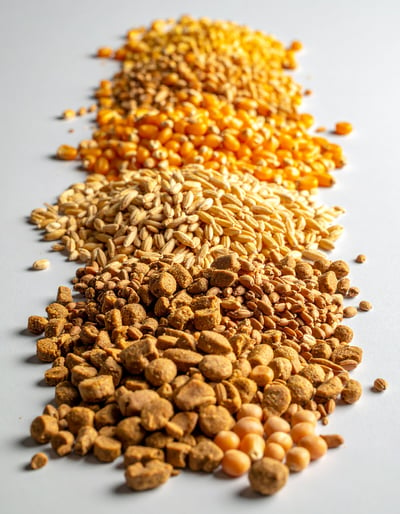
Feed ingredients and feed pellets used for microbiological quality assessment.

Feed & Feed Ingredients

Microbiological evaluation of spoilage organisms affecting feed quality, stability and storage performance.

Typical samples: Cereals, soy products, oilseeds, compound feed, feed additives and pet food.

Typical applications: Supplier qualification, storage assessment, feed hygiene programs and quality verification.


Environmental sampling in food production for spoilage organism monitoring and hygiene assessment.

Environmental Monitoring

Assessment of production environments as potential reservoirs of spoilage microorganisms and sources of quality deviations.

Typical samples: Surface swabs, contact plates, process water, and environmental samples.

Typical applications: Environmental monitoring programs, hygiene verification, trend analysis and contamination control.

Illustration Law

Regulatory Framework

Spoilage organism testing supports compliance with hygiene requirements, HACCP programs and customer-specific quality standards. Reliable microbiological data help verify product quality, support shelf-life validation and contribute to the early identification of process-related quality deviations.

We support food manufacturers and processors with scientifically robust analytical data for quality assurance, environmental monitoring, complaint investigations and continuous process improvement.

See our Microbiology Overview for further information on applicable standards and microbiological requirements.

Related Analytics

Microbiological sampling for hygiene indicator testing in a food production environment.

Hygiene Indicators

Indicator organisms provide valuable information about sanitation effectiveness, process hygiene and potential contamination risks. Combined with spoilage organism testing, they support the early identification of quality risks and help verify the effectiveness of preventive control measures.

Learn More
Microbiological culture and testing of food samples for pathogen detection and quality assessment.

Pathogen Detection & Testing

Spoilage organisms and foodborne pathogens often share environmental sources and contamination routes. Combining spoilage organism testing with pathogen detection provides a more comprehensive understanding of food safety, product quality and process performance.

Learn More